Posted on Leave a comment

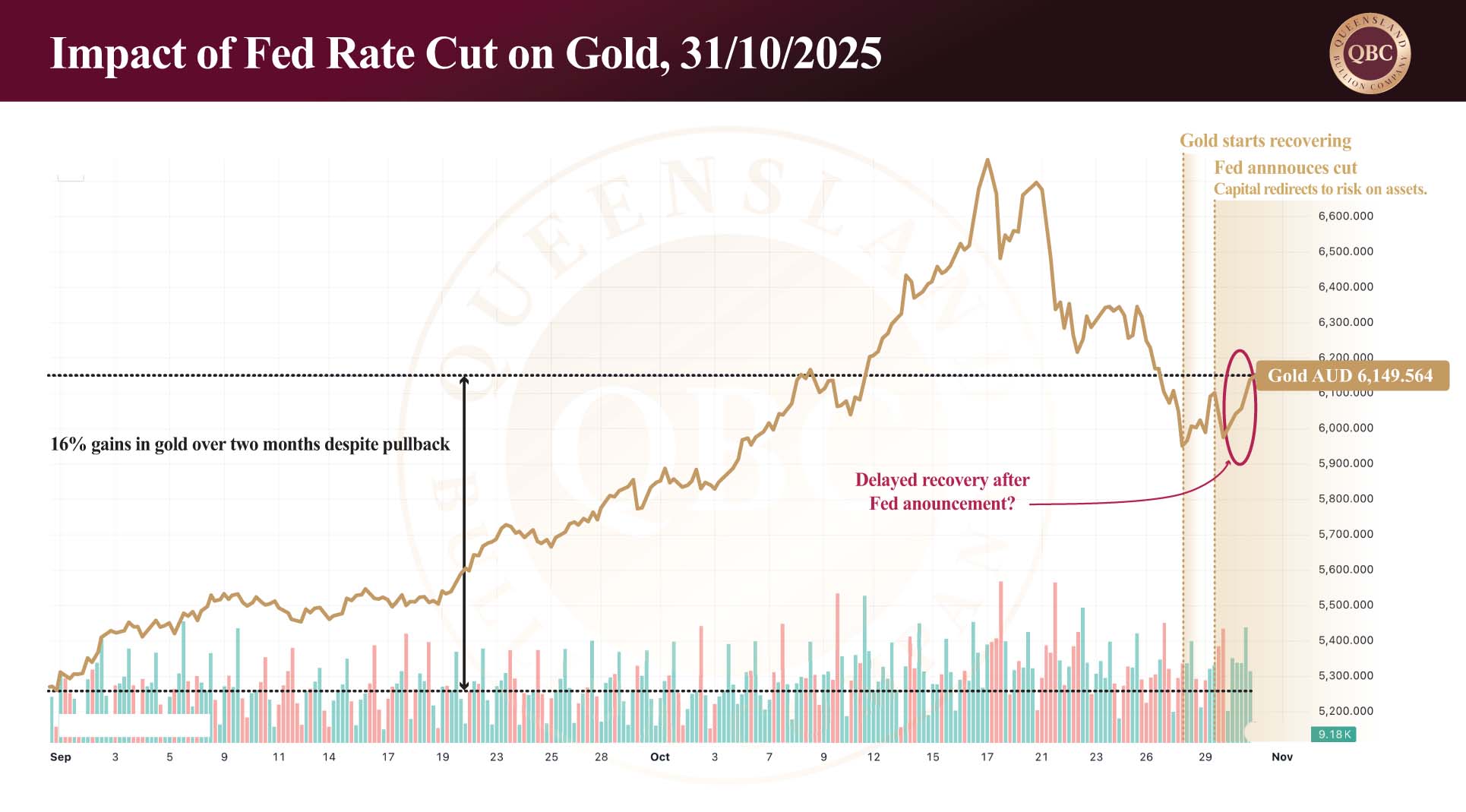
RBA Rate Cuts Set to Change Financial Landscape

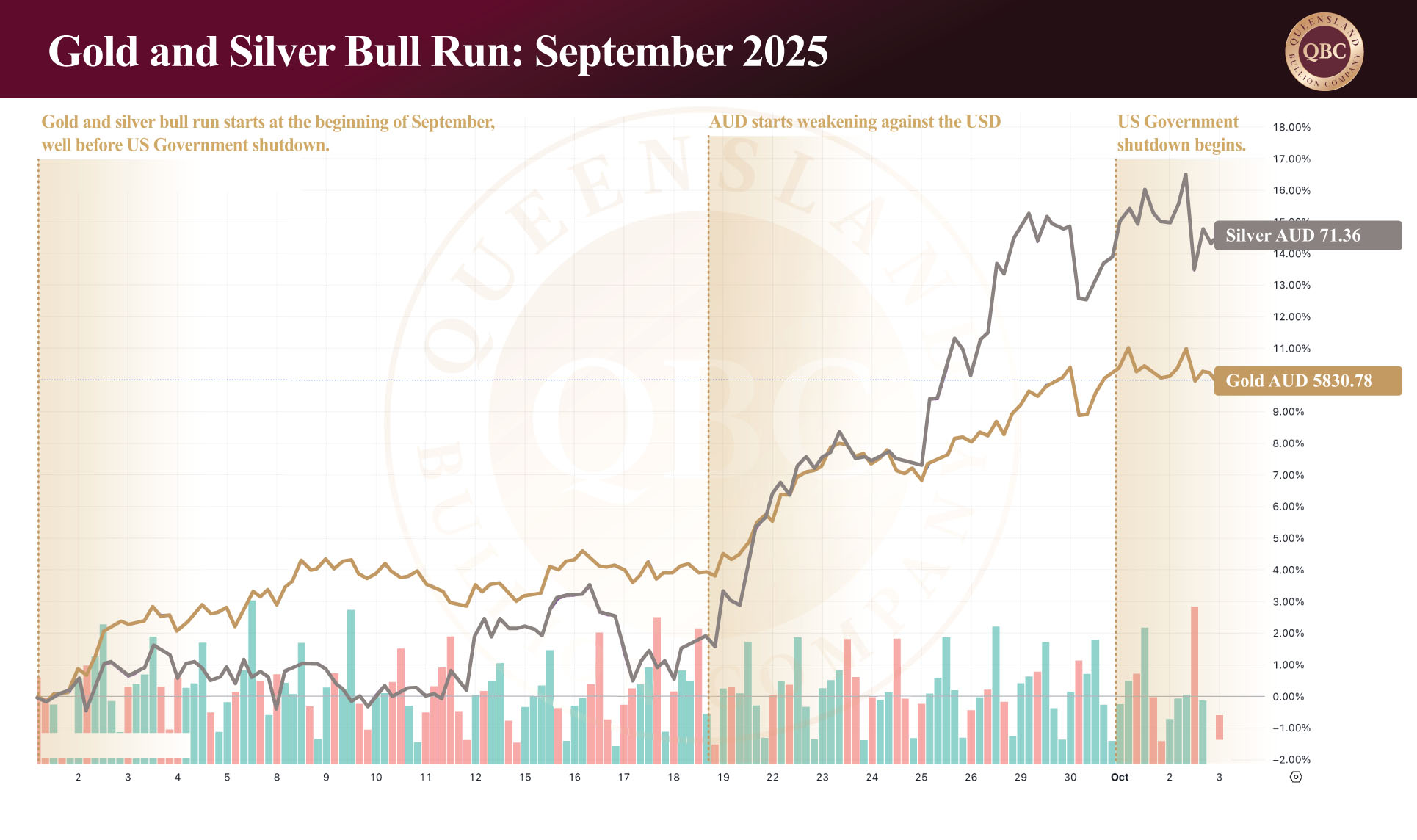
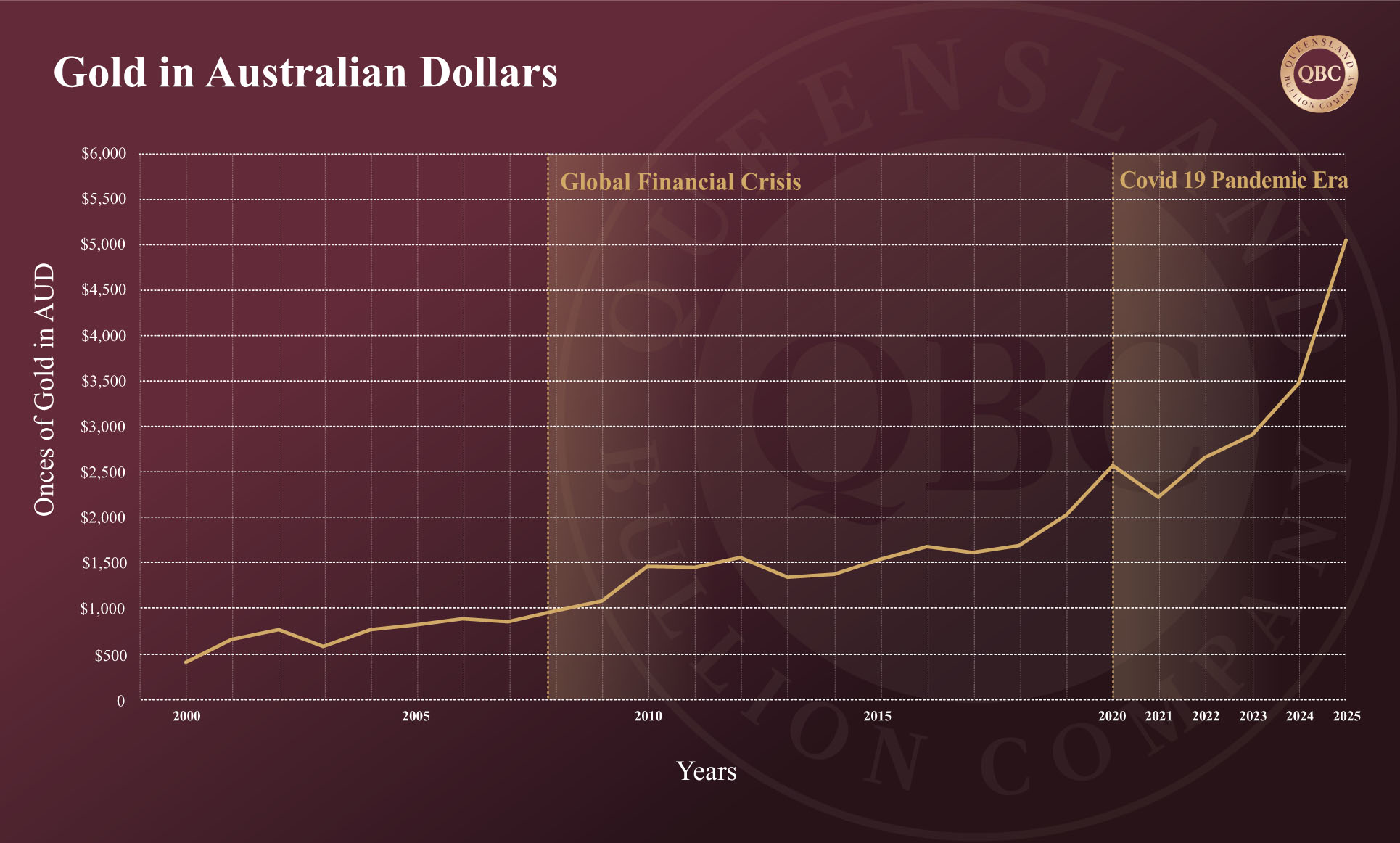
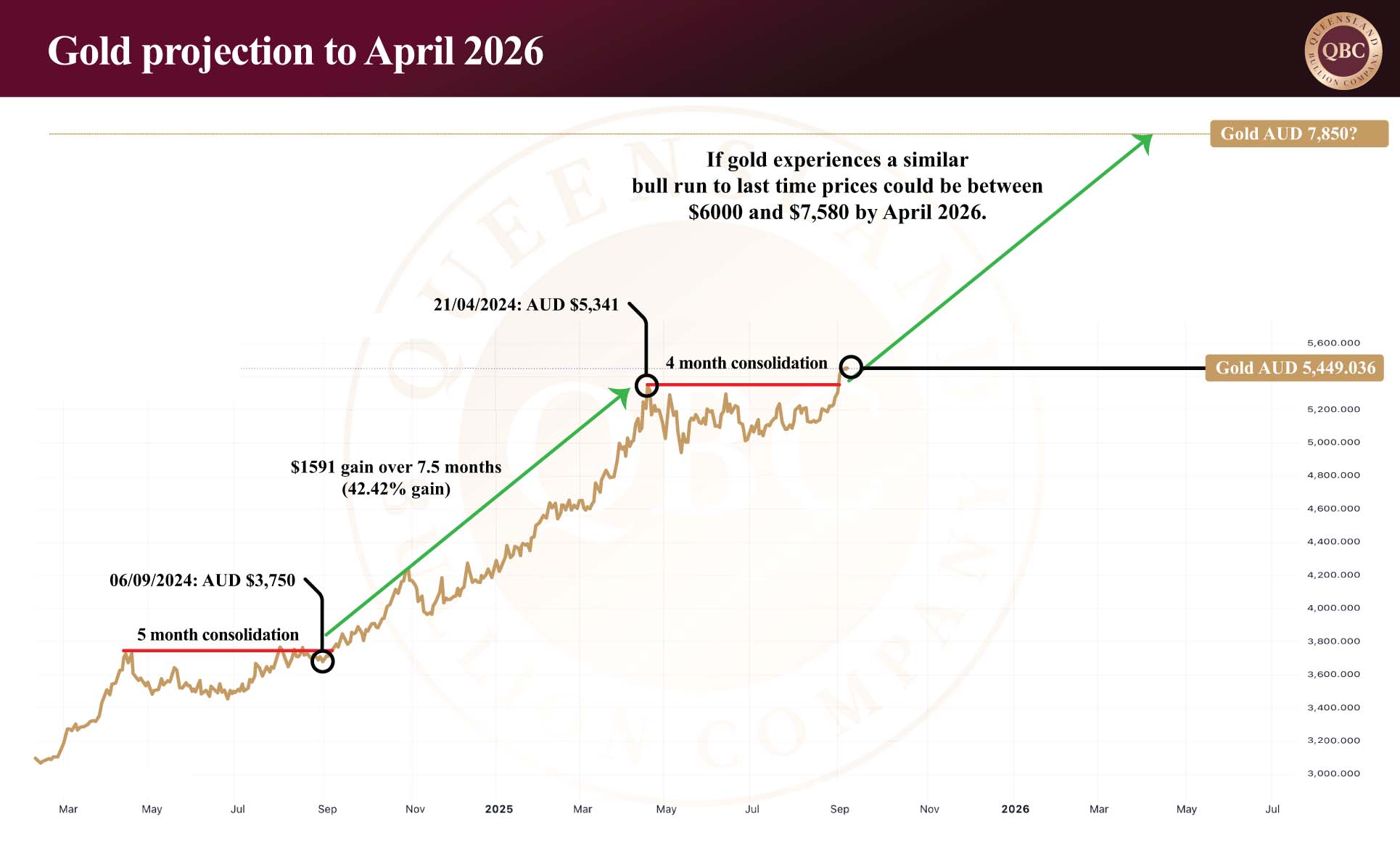
With expectations baked in for a Reserve Bank of Australia (RBA) rate cut next week, all eyes are on how this long-awaited monetary shift will reshape Australia’s economic landscape. The major banks are in rare alignment, unanimously forecasting a 25 basis point reduction in the cash rate—from 3.85% down to 3.6%—as inflation softens and household stress intensifies. There are even some analysts that suggest a 50 basis point reduction is possible this time around.  Markets are pricing in a 97% chance of this move.  The RBA rate reflects more than just market momentum.  It is are a mirror of Australia’s evolving macroeconomic reality.  Amid this transition, precious metals remain in sharp focus. At the time of writing, gold is trading at AUD $5,072, silver at AUD $56.11, and platinum continues its surge, now at AUD $2,112.


The Case for a Cut: Inflation Tamed, Growth Falters

The RBA’s mandate is to balance full employment with price stability, targeting inflation between 2–3%. With inflation now at 2.4%, within that comfort zone, and retail sales growth barely above zero, the path is clear for easing monetary policy. ANZ, NAB, Commonwealth Bank, and Westpac all project further rate reductions beyond July’s meeting, with some forecasts suggesting as many as four cuts by May 2026. The anticipation of weak wage growth, slowing job creation, and a deteriorating participation rate strengthen this argument. Meanwhile, GDP per capita has been declining for six consecutive quarters, marking the deepest real income per capita recession for a very long time. Against this backdrop, justification for monetary easing is a logical position.

Weakening AUD: A Tailwind for Precious Metals

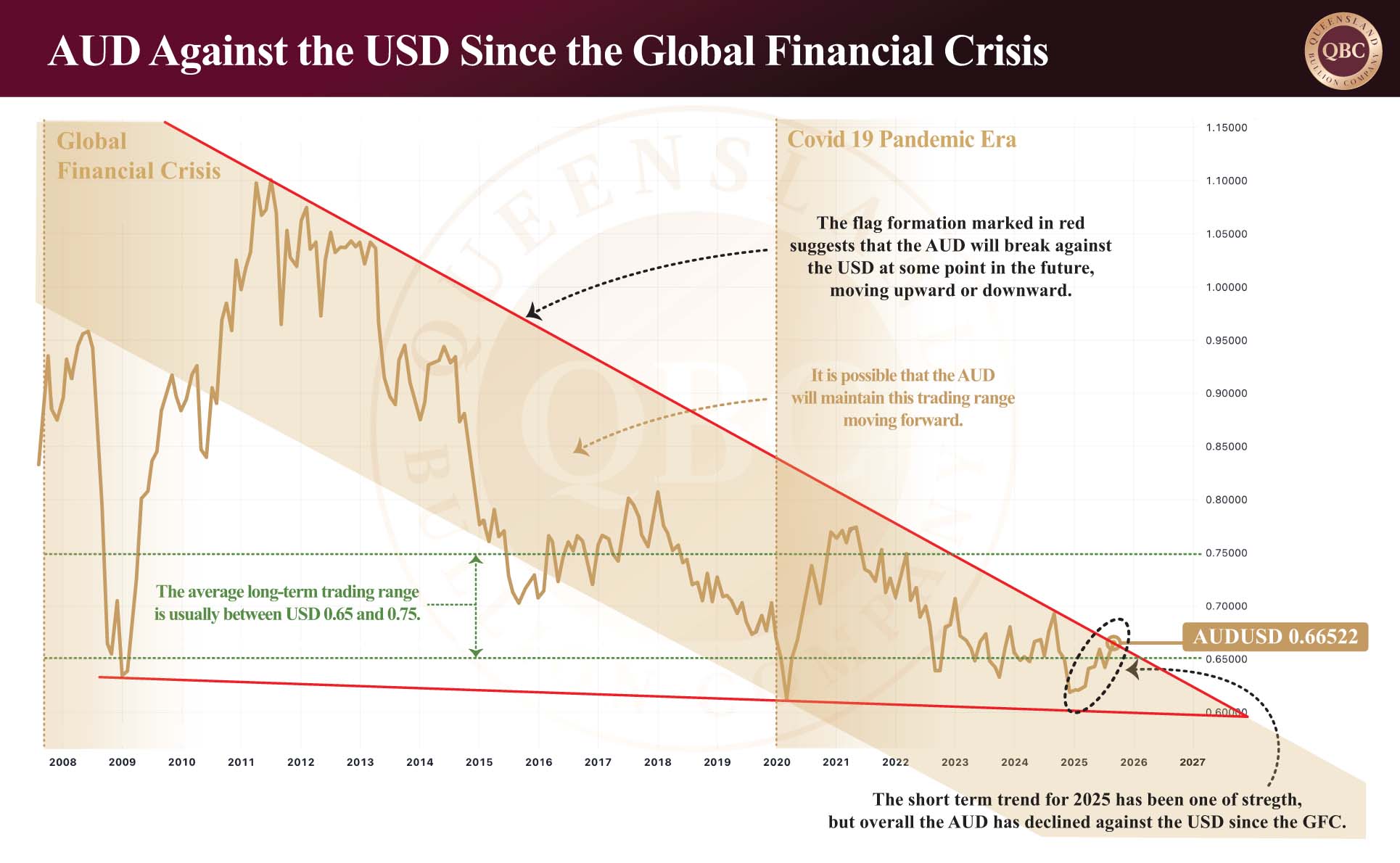
As Australian interest rates decline relative to those abroad, our local currency tends to weaken. This is because a rate cut makes Australian assets (such as Treasury bonds) less attractive to foreign investors, who then seek higher yields outside of Australia. Reduced investment capital inflows combined with increased outflows is one element that pushes the currency downward; however, there are multiple facets that combine that affect currency movement.

Because the American Dollar is the currency that precious metals are priced in, it is important to also consider USD’s position.  The Greenback is in a downward spiral compared to other currencies including our own.  Aggressive fiscal policies, rising debt, trade policies and tariff uncertainties, international shifts toward de-dollarisation, lack of investor confidence and how this affects capital flows all play a role in weakening the dollar. 

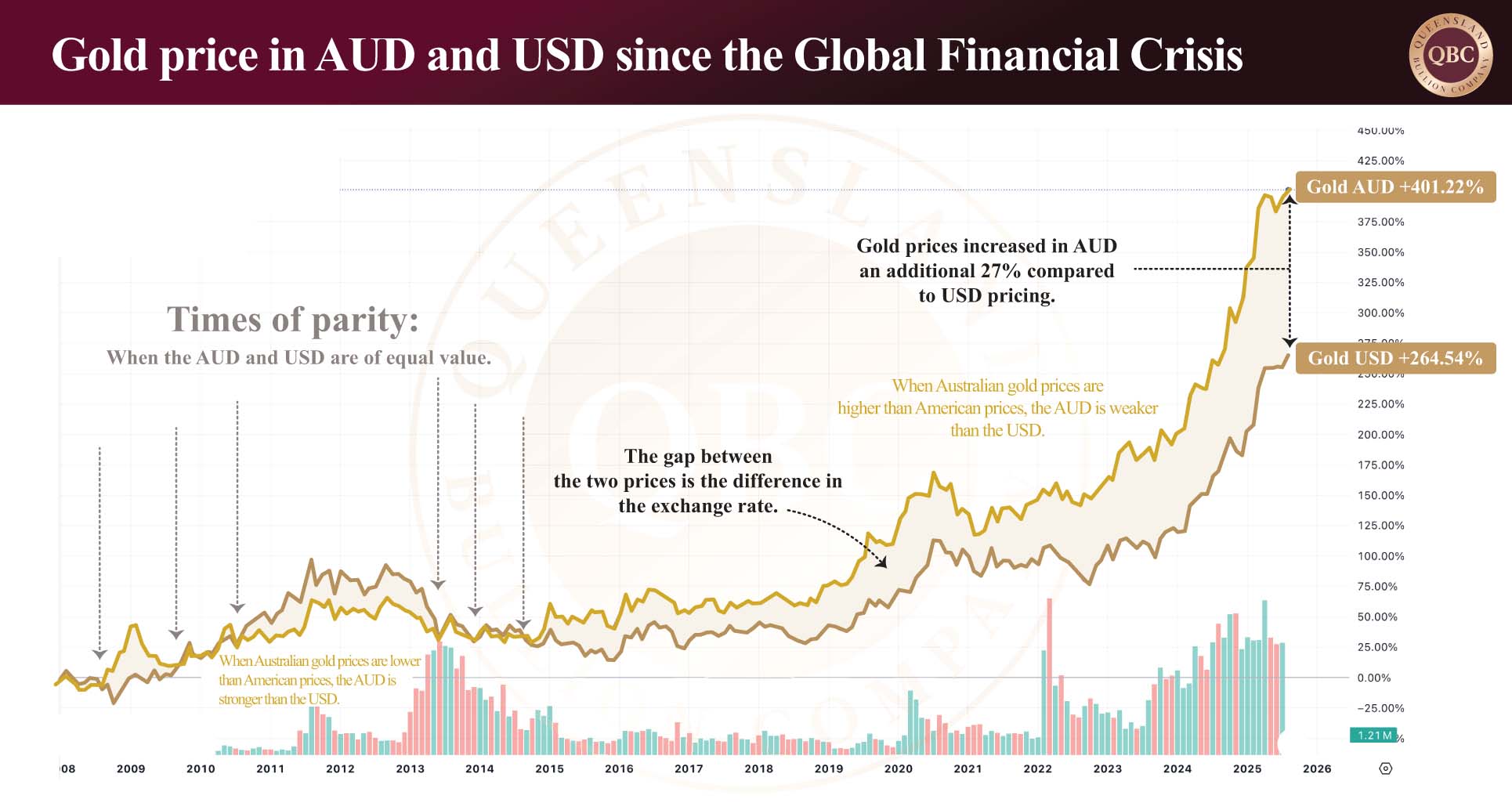
Both reserve bank rate cuts and the moving of the USD is important to factor in when considering the Australian dollar and its effect on precious metals prices.  Precious metals have historically outperformed during such currency devaluations—both as inflation hedges and stores of value when fiat confidence erodes. For investors holding physical bullion in Australian dollars, a falling AUD boosts returns even if global spot prices remain flat.

Property’s Artificial Revival: Short-Term Relief, Long-Term Risk

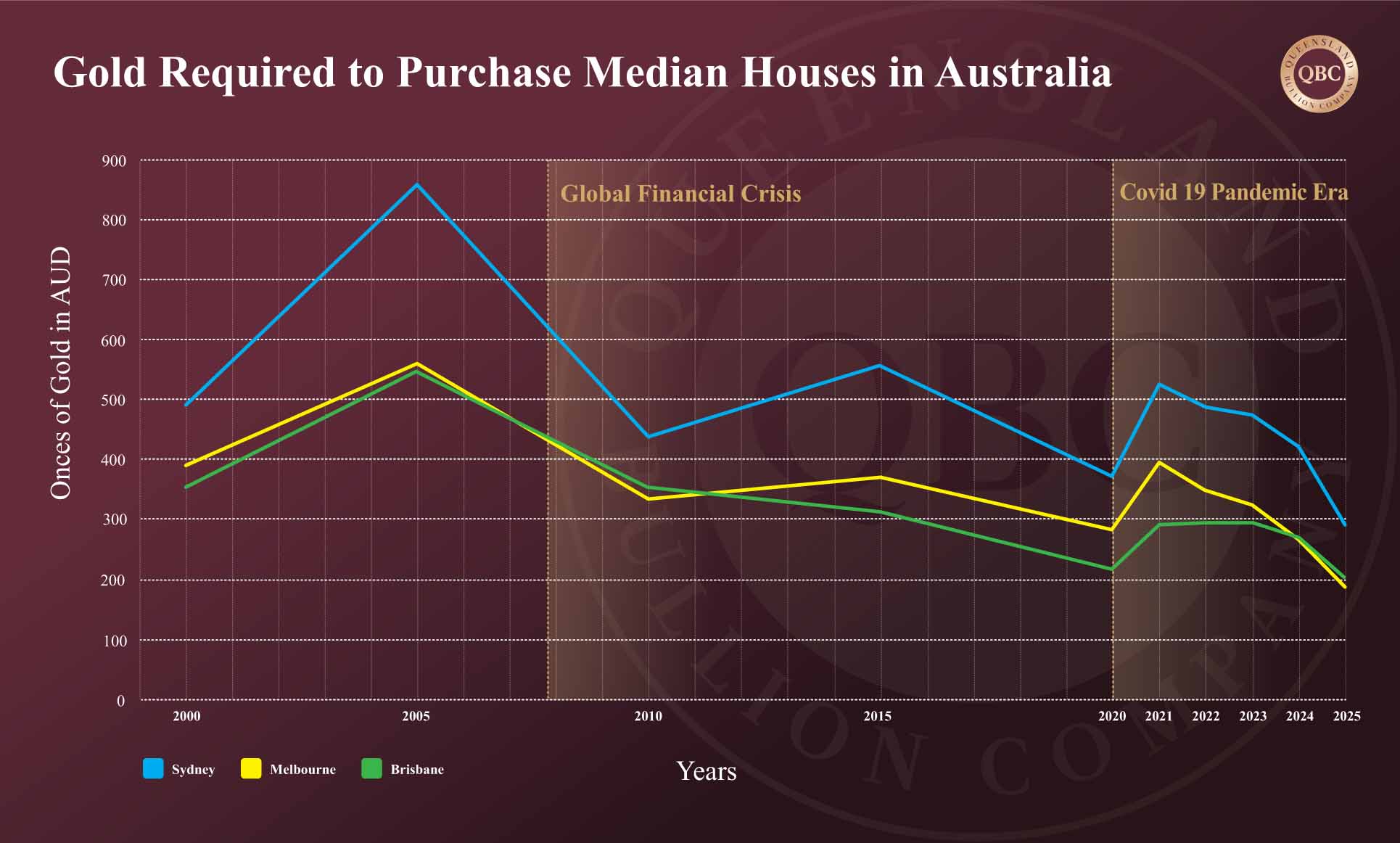
While a rate cut will offer welcome relief to mortgage holders—saving approximately $90 a month on a $600,000 loan—it is also likely to reignite speculative heat in the housing market. Research suggests a 0.25% rate cut can lift property prices by 1.5% to 2% within a year. With housing supply constrained and affordability stretched, this risks deepening the divide between asset holders and younger Australians priced out of the market. It also highlights the fragility of a property market reliant on low interest rates for price support. Lower rates may buy time, but they do not resolve structural imbalances. Investors should therefore consider diversifying into hard assets with a different risk profile—particularly as debt burdens and global volatility mount.  When the property market finally corrects, capital will leave this sector and look for another venue to both preserve wealth and continue growth. 

Why Now Is the Time to Buy Gold, Silver, and Platinum

The anticipated rate cut marks more than a tactical shift in policy—it is a signal that Australia’s monetary authorities are preparing for an extended period of a softer economy. With central banks worldwide still buying gold—32% planning to increase reserves in the next year—and with physical shortages emerging in both silver and platinum markets, the case for owning precious metals has never been clearer. Add to this the RBA’s likely reluctance to provide forward guidance, and investors are left to navigate uncertainty with limited visibility. In this environment, physical gold, silver, and platinum offer the one thing the broader market cannot: simply stability. They are not just a hedge against rate cuts or currency weakness—they are protection against a system increasingly reliant on monetary intervention for survival.

As we often tell our clients there is nothing more certain in an uncertain world than precious metal.

Posted on Leave a comment

The West’s Financial Challenges are Structural, Not Situational

Markets continue to react to every diplomatic ripple in the Middle East, pricing gold up or down depending on the headlines of the day. But while newsrooms focus on missiles and ceasefires, a deeper crisis continues to unfold in the background—one that will shape the future of fiat currencies and precious metals alike. From spiralling sovereign debt to persistent supply deficits and fragile delivery mechanisms, the evidence points to a fundamental, structural strain underpinning today’s global economy. Geopolitical tension may be the match, but the kindling has long since been laid. As one seasoned analyst noted recently: “If you’re waiting for gold to collapse once the Middle East quiets down, you might be missing the bigger picture.”  With gold trading at AUD $5,038, silver at AUD $55.98, and platinum at AUD $2,123.49, let us explore why the structural health of the financial system does not need a bomb in order to rupture.


Debt Crisis

As far as potential catalysts go for financial shakedowns, one of the most pressing structural fault lines in global markets today is debt. According to the Institute of International Finance, global debt has now reached an eye-watering $325 trillion, representing 328% of world GDP—a record. This isn’t merely a by-product of recessionary cycles or COVID-era stimulus; it is a long-standing trajectory embedded in Western fiscal planning. Ray Dalio, founder of Bridgewater Associates, warned just weeks ago that the U.S. faces a “debt-induced economic heart attack” if current trends persist. Most notably, U.S. interest payments now exceed defence spending—a staggering milestone for the world’s largest economy. The debt ceiling has become a floor which has become the baseline expectation for government spending. For investors, this undermines faith in fiat currency systems and highlights the appeal of tangible, non-counterparty assets like gold and silver. The Federal Reserve’s swollen balance sheet, combined with sticky inflation, suggests that central banks are trapped between credibility and solvency, a problem that ultimately cannot be printed away like so many other fiscal and financial problems.


Silver and Platinum Supply Deficits

Silver and platinum both entered structural deficits years ago—an imbalance long underreported by official figures. Since 2021, silver demand has consistently outpaced supply driving prices over 50% higher. While the Silver Institute projects a slightly narrower deficit in 2025—117 to 118 million ounces, down from 148.9 million in 2024—these numbers exclude key emerging sectors. Military demand remains unquantified.  Indicators for this use remain opaque at best and is estimated to amount to up to fifteen times more than any other industrial application. Likewise, silver’s expanding role in emerging industries such as aerospace, AI, robotics, and solid-state batteries is inadequately captured in conventional forecasts. Platinum faces similar dynamics: a two-year supply shortfall of nearly one million ounces persists despite growing industrial and green energy demand. As hydrogen cell vehicles enter the mainstream, platinum’s role has become increasingly strategic. With 90% of global supply coming from geopolitically sensitive regions like South Africa and Russia, the risk of supply shock is high—and rising. Investors should take note: these are not temporary bottlenecks, but long-term mismatches between available resources and accelerating use cases.  Read more about platinum here.


Gold and Institutional Buying

While silver and platinum gain industrial-use momentum, gold remains the reserve asset of choice for institutions. According to the latest Official Monetary and Financial Institutions Forum (OMFIF) survey, 32% of central banks intend to increase their gold holdings over the next 12–24 months—the highest conviction rate in five years. This is not a short-term trade. The reasons are clear with the first priority being diversification, then hedging geopolitical risk, and then protecting against inflation. For the fourth consecutive year, analysts expect central bank gold purchases to exceed 1,000 tonnes. This sustained and deliberate accumulation reflects how gold is not just seen as a wealth preservation tool, but increasingly also as a protection against future instability. What is striking is how quietly this repositioning is occurring. While retail investors chase headlines, central banks are rebuilding their balance sheets with physical bullion. This suggests an enduring revaluation of gold’s role not just as a crisis hedge, but as a strategic reserve asset. Institutional demand does not chase price; it sets the floor beneath it.


The Silent Precious Metals Crisis

Beneath the surface of daily spot movements lies a more alarming trend: the growing disconnect between paper and physical precious metals markets. In Q1 2025, only 1.2% of COMEX gold and 0.9% of silver futures contracts ended in physical delivery. Meanwhile, May 2025 saw a staggering 16,200 silver contracts—equal to 81 million ounces—stand for delivery, consuming 16% of registered COMEX inventories. This is the highest delivery-to-stock ratio since 2008 and signals serious stress within the system. Alarmingly, 23% of silver delivery requests were redirected to cash settlement, up from 12% in 2024. This means the warehouse system cannot reliably meet physical obligations. Adding to concerns, 84% of silver futures are held by a handful of commercial traders—primarily investment banks—who dominate spread trading and price discovery. The $920 million JP Morgan spoofing settlement resolved only 0.3% of the firm’s alleged manipulative trades executed between 2015-2020, underscoring the depth of systemic vulnerabilities in precious metals paper trading. The illusion of liquidity in the paper market masks an increasingly illiquid physical reality—a dangerous divergence for any asset class, but especially for metals regarded as trust anchors in uncertain times.


Conclusion: Structural, Not Situational

Markets will always respond to geopolitical shockwaves, but the deeper story is the slow-motion erosion of economic foundations. The West’s financial challenges are not about any single war, central bank statement, or election cycle; they are the cumulative result of structural imbalances—runaway debt, overstretched supply chains, institutional manipulation, and a global pivot back to tangible assets. Precious metals are not spiking or softening solely because of crisis headlines; they fluctuate because the scaffolding beneath fiat currency systems is beginning to creak. Investors who understand this distinction—who look beyond the noise and into the bedrock—are those best positioned for the decade ahead. In this environment, gold, silver, and platinum are not just hedges. They are a means to survive and thrive.

Posted on Leave a comment

Penchant for Platinum?

While gold and silver have dominated headlines with strong year-to-date performances, platinum has quietly surged into focus. The metal has climbed an impressive 45% this year, with a 23.5% rise just this month alone. At the end of May, platinum traded at AUD $1,624 and now sits at AUD $1978. With gold currently trading at AUD $5,187 and silver at AUD $56.27, investor enthusiasm across the precious metals space is well-founded—and platinum may be the one to watch next.


What is platinum?

Like gold, platinum is a Noble Metal and sits beside it on the Periodic Table. It boasts a melting point of 1,768°C (compared to gold at 1,064°C), exceptional resistance to corrosion, remarkable chemical stability, and is the most ductile of all pure metals. Its utility spans far beyond bullion, with critical industrial applications in the automotive sector, catalytic converters, laboratory equipment, glass manufacturing, dental instruments, electrical contacts, and thermometers. Because of this, platinum is highly sensitive to economic cycles—more so than even silver—and consequently, is the most volatile of the three major investment metals.

Another key factor in its volatility is the size of the market. Above-ground gold is valued at approximately USD $23.1 trillion, silver at USD $340.6 billion, and platinum at just USD $3.84 billion. That means even modest flows of capital into platinum can have an outsized impact on price. While this can generate strong gains during bullish conditions, it also increases downside risk in a correction. The price swings cut both ways.

Platinum is not a monetary metal

Unlike gold and silver—which have served as stores of value for more than 5,000 years—platinum has a far shorter monetary history. Though first referenced in Europe in 1557, it was not truly understood until the 18th century. Today, only 8% of platinum demand comes from investment, with 67% tied to industrial use and 24% to jewellery. This makes it more exposed to production cycles and commodity flows than sentiment-driven safe haven demand.


The platinum deficit

For the past three years, global demand for platinum has outpaced mine supply, tightening the market considerably. Over the past two years alone, the shortfall has totalled nearly one million ounces. This tightening is one of the key reasons platinum is now entering what appears to be the early stages of a bull run.

The causes of this deficit, however, are complex. Roughly 90% of global platinum supply comes from just four nations: South Africa, Russia, the United States, and Canada. As shown in the chart below, the BRICS-aligned countries dominate global reserves, exposing platinum to a unique mix of geopolitical risks. Sanctions against Russia have strained supply chains, while South Africa faces persistent challenges—rolling blackouts, labour unrest, rising costs, declining ore quality, and underinvestment. The result is a squeeze on supply just as demand begins to recover.

What this means for the price of platinum

Platinum holds a distinct place in any diversified metals portfolio. While gold offers long-term security and silver provides disproportional upside in a bull market, platinum straddles the middle ground. It shares gold’s density and storeability, but historically was twice the price of gold. Today, the gold-to-platinum ratio stands at 1:2.6, highlighting a major reversal in valuation. Platinum is also thirty times more rare than gold—yet trades at a steep discount.

With deficits mounting and supply chains under pressure, platinum may represent one of the most undervalued opportunities in the market today. For investors with an established position in gold and silver, and the appetite for a higher-risk, higher-reward play, platinum deserves serious consideration.

Posted on Leave a comment

Israel Attacks Iran: Gold Soars

In a dramatic escalation, Israel has launched strikes against Iran, reportedly targeting nuclear facilities. Iran has confirmed multiple casualties—including leaders and children—intensifying fears of a broader regional conflict. This is precisely what every gold investor dreads but also prepares for.

Since trading opened this morning, gold has surged by as much as AU$126. With spot prices currently sitting at AU$5,299 for gold, AU$56.22 for silver, and AU$1,972 for platinum, it appears that precious metals are poised for further upside. However, it is critical to examine the underlying drivers of this rally to determine the likelihood and sustainability of another bull run.

Geopolitical tensions and safe haven demand

Safe haven demand has spiked dramatically as tensions between Israel, the United States, and Iran intensify. Earlier this week, Washington advised restraint from Israel amid ceasefire negotiations with Hamas relating to Gaza and ongoing nuclear diplomacy with Tehran. However, by midweek, President Donald Trump had ordered the withdrawal of all non-essential State Department personnel from Iran, Iraq, and neighbouring nations, citing a credible threat of imminent attack.  While Trump later softened his stance—from declaring war “imminent” to it “could very well happen”—the damage to market confidence was done. With hostilities now underway, the veneer of diplomacy has all but vanished.

Compounding the volatility, three European nations announced intentions to trigger snapback sanctions in response to Iran’s alleged violations of nuclear non-proliferation agreements.


Iran’s response

Regarding the European sanctions, Iran has denounced them as politically motivated rather than grounded in IAEA findings. Russia, meanwhile, has issued a stark warning that pursuing such sanctions would be “playing with fire.” Despite the inflamed rhetoric, Iranian military movements have thus far remained non-provocative. According to The Jerusalem Post, “none of the moves appear military in nature.” That, however, may not last long with Iran vowing a strong retaliatory response to the current strikes.


Gold in Iran: a surge beyond the global norm

The impact on gold within Iran has been even more dramatic than elsewhere. Amid rampant inflation, crippling sanctions, currency devaluation and mounting geopolitical uncertainty, Iranian citizens have increasingly turned to gold as a financial refuge.

While Australian gold investors have seen price growth exceeding 50% over the past twelve months, Iran has experienced an even steeper climb. Gold prices denominated in Iranian rials have skyrocketed more than 80%, with the value of a single gold coin soaring from IRR 401 million to IRR 735 million. This represents an outperformance of approximately 45% over global gold price growth.


What’s fuelling the rally in Iran?

Several structural and macroeconomic forces are contributing to Iran’s extraordinary gold rally:

  • Runaway Inflation: As of May, inflation in Iran approached 30%, making gold a practical hedge for everyday savers.
  • Currency Collapse: A steadily weakening rial has accelerated demand for hard assets.
  • Sanctions and Isolation: Gold remains one of the few liquid stores of value not subject to direct international controls.
  • Central Bank Strategy: The Central Bank of Iran, among the few that remains relatively independent, is aggressively stockpiling gold to insulate its reserves against financial sanctions.

In some instances, bullion imports have even been exempted from tariffs—facilitating discreet international trade in defiance of formal sanctions. Gold in this context serves not only as a store of value but as an economic weapon.


What this means for investors

Regardless of your geographic location—be it Iran or the West—uncertainty, inflation, and conflict continue to elevate gold’s appeal. While silver remains a valuable component in a diversified portfolio and often outperforms in bull markets, it is more sensitive to broader economic slowdowns.

Gold, on the other hand, is largely decoupled from industrial cycles during times of geopolitical upheaval. In such moments, it is not merely an investment; it is an imperative.

Posted on Leave a comment

How the Bond Market Could Potentially Ruin Everything

High bond yields are currently a hot topic as 20-year US Treasury bonds peaking over 5% yields  last week. With gold trading at AUD $5,154.73, silver at AUD $51.89, and platinum at AUD $1,680.62, it is a good time to pause and consider the wider implications of the international bond market—and how it could be the source of the black swan that astute investors is monitoring closely.

This article builds on last week’s discussion regarding bonds and margin calls. Find the full article here to follow the thread. To briefly recap: we explored how rising interest rates on US Treasury bonds (yields) indicate a lack of confidence in the government’s ability to repay debt, and how that concern eventually transfers to the private sector—specifically equity shareholders (investors in the stock market). Stepping back to view the bond market in the context of the international financial landscape, the picture becomes somewhat more alarming. Since the start of the Covid-19 Pandemic Era, bond yields have risen significantly—a marked indicator of how the market assesses the fragility of what is considered one of the safest assets in the world.

The graph below of 20-year government bond yields illustrates how the United States, Australia, and the United Kingdom have all had to increase returns significantly in order to attract investors to purchase government debt. This is an understated admission of risk being factored into doing business with governments that have, historically and perhaps technically, never defaulted—yet. What this graph shows is that lack of confidence is not limited to the United States; it is global, and rightly so.

Japan

Note on the graph that Japan fares the best. At first glance, this may appear to suggest sound financial management and investor confidence. But it is not, and here is why.

Japan’s debt-to-GDP ratio is one of the highest among developed nations, sitting at 263% and equating to USD $8.84 trillion (AUD $13.35 trillion). This is largely because approximately 38% of their population is over the age of 60. While this may imply wisdom, it also means Japan’s workforce has been in long-term decline. For governments, a large senior population and a shrinking working base means greater capital expenses and reduced collectable tax income. Japan has managed this by keeping interest rates at or near zero to attract investor capital.


Enter the yen carry trade

The yen carry trade is a financial strategy involving borrowing in Japanese yen at extremely low interest rates and using those funds to invest in higher-yielding assets abroad. For example, investors borrow yen, convert to USD, and purchase US Treasury bonds. Japan offers near-zero borrowing costs, while the United States offers high returns and an ironclad repayment history (including the ability to print money if required).

The problem arises when Japan’s bond yields begin to rise, signalling an increase in the Bank of Japan’s (BOJ) interest rates. Since 2016, BOJ maintained a negative rate of –0.1%, until 2024, when it began lifting rates to the current level of 0.5%. While still low by international standards, this has required major adjustments from investors using the yen carry trade.

Wouldn’t the higher yields from US bonds offset Japan’s rate hikes? In isolation, yes. But the complication comes from foreign exchange pressure: as Japanese interest rates rise, so does the strength of the yen relative to the US dollar. Investors who borrowed in yen now need more USD to repay their loans. This currency cost, combined with higher interest expenses, is forcing many to unwind their positions.


Yen carry trade: cause and effect

Japanese institutional investors (including banks, pension funds, insurers, and investment trusts) are the largest foreign holders of US Treasury bonds. They currently hold USD $1.13 trillion (AUD $1.71 trillion) in US debt. As the yen carry trade unwinds, the American government may have just lost its most important customer.

At the same time, the US Treasury just last night received USD $17.869 billion (AUD $26.96 billion) in offers to sell back bonds before maturity. Only USD $2 billion (AUD $3.02 billion) was accepted. This speaks volumes about the financial strain now facing the US government. If Japanese investors were not only to stop buying but to begin selling their Treasury holdings into the same market the US Treasury is attempting to sell into, it could spell pandemonium. A black swan event beginning in the bond market is no longer difficult to imagine.


What does this mean for gold?

As mentioned in our previous article, there are two ways this could unfold for gold. If bond yields continue to rise due to declining market confidence, bonds will dominate investor attention as a source of yield. In that scenario, gold may soften.

However, in a more probable and far-reaching scenario, bond markets around the world may destabilise. If that happens, gold is likely to surge as risk-averse capital floods into the precious metals sector. The real question is timing—something even the best among us cannot predict.

Posted on Leave a comment

Moody’s Downgrade and Market Reaction: Implications for Gold

Moody’s has downgraded the United States’ credit rating this week from AAA (negative) to AA1 (stable), and in doing so, put the stock market in a tailspin. The result for precious metals was an initial rise in value with a softening in prices overnight. With gold trading at AUD $5,160, silver at AUD $51.78, and platinum at AUD $1,706.57, it is difficult to predict what direction precious metals will take without assessing the role that American government bond rates have on the stock market, real estate, and consequently, gold and silver. After all, they all compete for the same market capital.


The downgrade and what it means

When Moody’s downgraded the US credit rating, it essentially reinforced the growing scepticism amongst investors of the government’s ability to pay back their debt. This is reflected in the recently auctioned 20-year Treasury bonds where investors held out for interest rates as high as 5.16%. To put this in perspective, the pre-Pandemic Era rate was only 1.19%.  While it is a great result for those investing in bonds, it has caused a significant pull back in equities.

How do bond rates affect equities? Simply put, the private sector needs to provide better financial yields than the government—and it’s not. With a perfect track record of paying debt (and the ability to print money), the government is seen as low-risk and reliable when it comes to honouring their treasury bonds—the mechanism by which they sell their debt. If confidence in the government’s ability to do so is compromised, then the market dictates a higher interest rate for returns prior to purchasing to reflect any perceived risks.  This is what unfolded in the last week.

On the other hand, the private sector (stock market) is seen as a higher risk when it comes to investing. It generally must provide higher returns than government bonds to attract capital. Stock dividends are set according to free cash flow. Hence, the only way to secure higher yields than those investing in bonds is to wait for the value of the shares to drop while dividends remain the same. The result is that investors pause their equity purchases and the stock market dips—just as it did this week as the Dow Jones Industrial Average (DJI) sank more than 800 points, or nearly 2%.


Margin calls

At this point, it could be argued that it’s a win/win situation. Bond holders have secured higher interest rates and equity investors better value; however, the point of contention has simply been moved onto the publicly traded companies. If the value of their shares goes down, so does the asset that the investor relies on for funding. As asset values decrease, the potential result is a margin call from the investor’s financiers wherein they may be obliged to sell off assets to close their position.

The swift selling of assets in such a fashion is what preceded the Global Financial Crisis (GFC), and this is the underlying concern regarding high Treasury bond interest rates. It is market mechanisms that dictate bond interest rates and share prices—not the government or the Federal Reserve. Ultimately, both must give in to the market or risk catastrophic financial pain.


Where does this leave gold?

There are two ways this can play out for gold. If bond yields remain high, then the price of gold may soften as it competes against bonds for capital.  By this we mean, that investors may obtain government debt with a higher interest rate which may be more beneficial than an asset increasing in value. However, when American bond yields are high, they are usually accompanied by a stronger Greenback. Also, if the underlying cause drivers are fiscal stress, credit worries or persistent inflation fears, real yields actually stay depressed, allowing gold to hold ground or rally. The implication for Australian investors is that it could potentially signal a higher value of gold in local markets.

However, fundamentally the Western financial system is far from healthy. Read about factors that play into this—such as inflation and the Fed’s balance sheet, overvaluation of stocks and real estate, and the repatriation of gold—in our previous articles. If bond yields normalise and the status quo is re-established, then eventually the West will have to take its medicine and deal with these systemic failures. If the price remains soft, consider it a perfect time to hedge against financial uncertainty by investing in gold.