Posted on Leave a comment

Is Silver Undervalued?

Silver achieved a new all-time high when it reached AUD $59.91 last Monday, igniting hopes among investors for a climb to $2,000 per kilogram, or approximately $62.20 per ounce. The rally places silver, currently trading at $58.47, firmly back into the spotlight, joining gold ($5,088) and platinum ($2,201) as metals of increasing strategic interest. But is silver still undervalued at these levels? A deeper look into monetary supply, mining trends, market ratios, and chart patterns may suggest the answer is still yes.


M2 Money Supply  

One useful framework for evaluating silver’s worth is by comparing its price against the U.S. M2 money supply.  This indicator is the U.S. Federal Reserve’s estimate of liquid assets including cash, money in bank accounts and other deposits that can be readily convertible to cash.  This ratio reveals whether silver is keeping up with the expansion of fiat liquidity or falling behind.  If the value of an asset increases more quickly than the M2 money supply then it is more likely to experience a correction in price; conversely it is also true in that if the value of an asset lags behind the M2 money supply indicator then it will likely experience an increase at some point.  Since the mid-2010s, silver has lagged M2 growth, as it did before the Global Financial Crisis (GFC).  This is a potentially bullish signal for silver.

In short, while central banks have aggressively increased currency in circulation, the price of silver has not kept pace. If past patterns hold, the metal may be entering a prolonged phase of strength as it plays catch-up with inflationary expansion.


The Paper vs Physical Divide 

Few markets are as distorted as the silver market. The current ratio of 375 ounces of “paper” silver (via ETFs, futures, and other derivatives) to every 1 ounce of physical silver is staggering. Investment banks hold extensive short positions, many of them naked (meaning they’re not backed by actual metal).  These short positions give the appearance of there being much more silver in circulation than there really is.  As the market is flooded with silver paper contracts, it suppresses the price which leads to an undervaluation of the metal.

If silver prices continue rising, short sellers may be forced to close their positions en masse, triggering a short squeeze. For every $1 gain in silver, bullion banks collectively face losses exceeding $262 million. A $10 rally would create billions in losses — and panic buying to cover those shorts could push prices to extraordinary levels, particularly in the physical market where supply is tight.


Supply Deficits and Rising Demand

 Silver mining production in 2024 totalled just 25,000 metric tonnes, a figure dwarfed by rising demand in the industrial, solar, and investment sectors. According to The Silver Institute data, the market is on track for a fifth consecutive annual deficit in 2025.

This supply imbalance is unlikely to correct quickly. Much of the world’s silver is mined as a by-product of other metals like zinc or copper, limiting miners’ ability to increase output in response to silver-specific demand.  In developed countries mines take approximately five to ten years to wind up once a project is approved.  And it is likely that additional projects may not be considered until the price of silver increases.  Hence, the setup is clear: tightening supply, increasing use cases, and insufficient investment in new production capacity.


The Gold to Silver Ratio Speaks Volumes

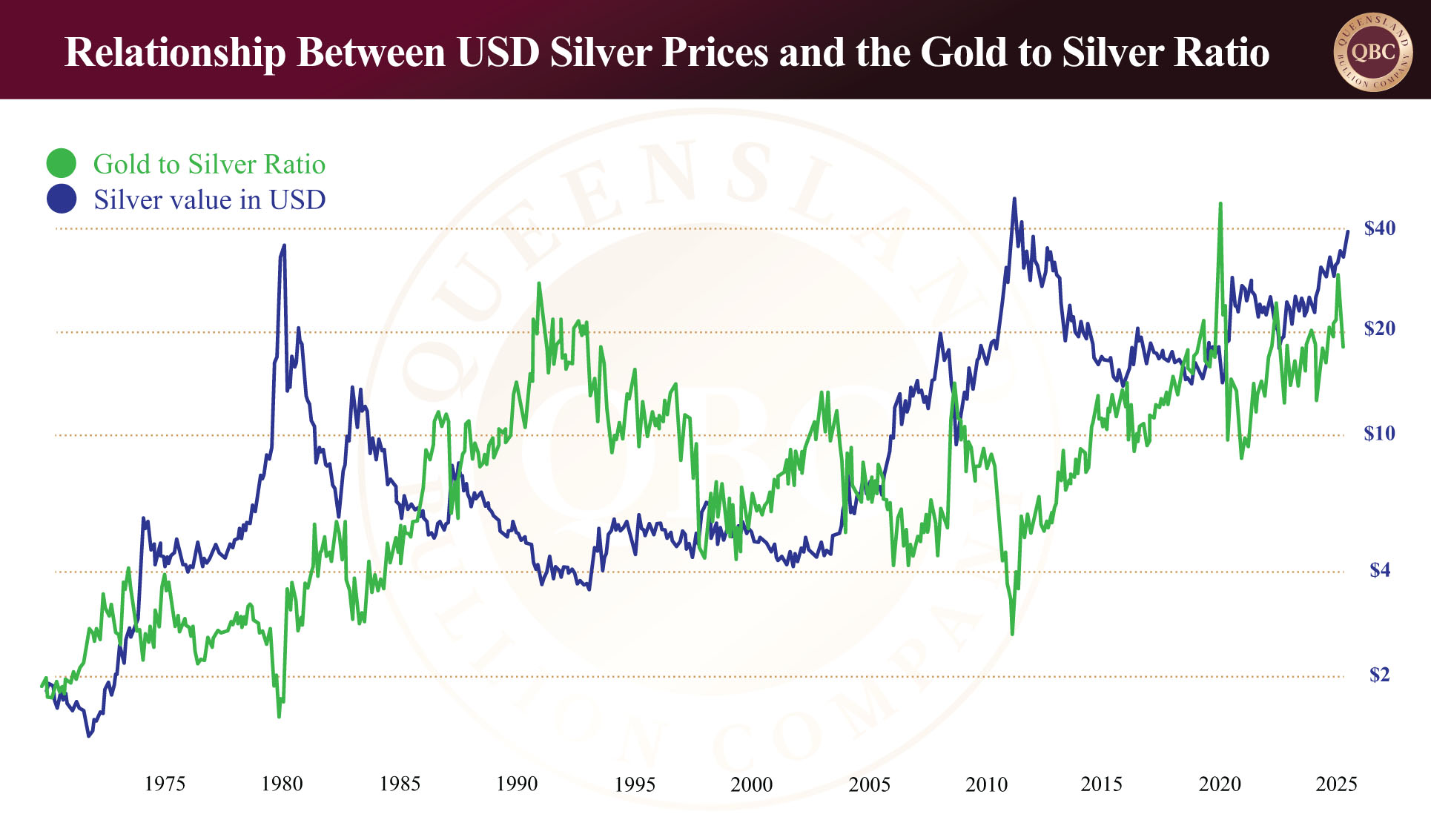
Perhaps one of the clearest signals of undervaluation is the gold-to-silver price ratio. Based on 2024 mining production quantities of gold and silver, for every one ounce of gold mined approximately 7.5 ounces of silver is produced. Yet the ratio is 1:86.31 at the time of writing.  This is still high compared to the historical average and suggests that the most recent increase in silver is likely at the very least sustainable, if not suggestive of further gains to come.

During historic silver bull markets, the ratio has narrowed significantly. April saw the ratio at 1:106; prior to the GFC it peaked at 1:104; and during the Covid 19 Pandemic Era it made history when it reached 1:124.   It dropped as low as 31.6 during the Global Financial Crisis in 2011 and dipped as low as 15.1 during the 1980s silver rush. Should silver return to even half of that historical compression, its upside potential becomes dramatic. What does this mean? The ratio simply reflects the relationship between gold and silver, in that if the price of silver increases faster than gold the ratio reduces.  If the price of gold increases faster than silver the ratio rises.  If they both rise or fall together the ratio generally reduces but at a slower rate.  For example, if the ratio is 1:80 would mean that for each $1 silver increases, gold would need to increase $80 to maintain the same ratio.
 

Charting the Future: The Cup and Handle 

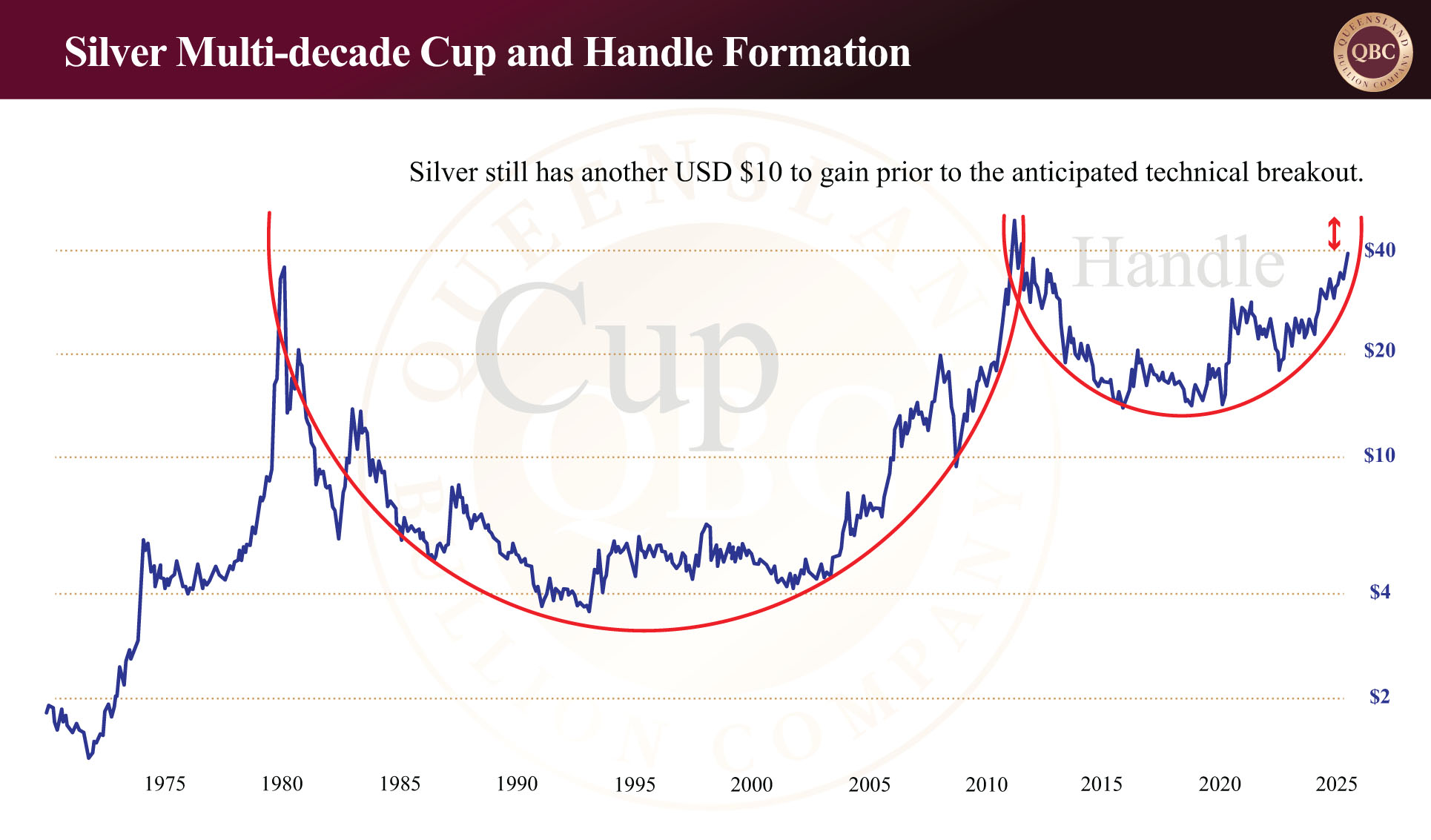
Technically, silver is nearing the final stages of a multi-decade cup and handle formation, one of the most powerful bullish setups in market history. Currently trading at USD $39.19, it is $10 short of its all-time high of $49.21 reached in 2011. Then silver hit the $40 threshold and1 it only took one month to breach $49. If the metal clears the psychological marker of $50, chartists anticipate a powerful breakout, potentially ushering in a fresh multi-year bull market with targets far above $60.  If silver plays catch up to gold, the gold to silver ratio will reduce as it did when it peaked in 1979 and 2011.  And this is when many silver bulls will look to take profits.


A Market Poised to Move

When measured against money supply, mining fundamentals, market ratios, and historical price action, silver still appears undervalued. A strong technical setup, combined with growing industrial demand and a fragile paper market, adds fuel to a potential surge.

For Australian investors, the implications are significant. As the USD-AUD exchange rate fluctuates and the global appetite for physical assets rises, silver remains a compelling candidate for strategic accumulation. Whether you prefer coins, bars, or both, the question may not be whether silver will rise, but when.  To read more on the timing of silver’s anticipated bull run read our previous article When Will the Silver Squeeze Begin?

Posted on Leave a comment

Why Is Powell Such a Big Deal for Trump?

As rumours swirl about Federal Reserve Chairman Jerome Powell’s potential resignation, investor sentiment has become increasingly fragile. Market volatility has spiked as concerns grow that the Fed’s independence may be under threat. Spot gold is trading at AUD $5,126, silver at AUD $58.79, and platinum at AUD $2,278, all buoyed by the growing sense of unease. At the heart of this turbulence is the escalating tension between President Trump and Powell, with the President publicly calling for immediate rate cuts and expressing open dissatisfaction with Powell’s neutral stance. Political interference in central bank policy is rare; open demands for leadership change are even rarer. The implications, however, are far-reaching and merit close examination.


Why Target Powell Now?

President Trump’s criticism of Powell is not new, but it has intensified markedly in recent weeks. The President insists interest rates should be at least 3% lower than their current level, down to 1.5% from 4.5%. The motivation is clear: lower rates would significantly reduce the cost of servicing the U.S. national debt, especially with $9 trillion maturing in 2025. In theory, such a reduction could save the Treasury tens of billions in annual interest.

However, cost control is not part of the Federal Reserve’s dual mandate, which is to maintain price stability and maximise employment. Cutting rates now, while inflation remains sticky and the labour market tight, could undermine that mandate.

There is also a secondary and possibly more important motive: a weaker U.S. dollar. Declining interest rates typically push the dollar lower, giving American exports a competitive boost — a longstanding Trump priority, and one that his administration relies on if their tariff policy is to succeed.


What Happens If Powell Leaves?

If Powell resigns and a new, more compliant Fed chair is installed, rate cuts would likely follow swiftly. This could trigger a rapid unwinding of U.S. Treasuries. If investors anticipate deeper or faster cuts, they may sell off bonds to avoid locking in low yields — especially if inflation is expected to rise. The result? A spike in yields, falling bond prices, and capital flight out of the U.S. debt market.

As Treasuries weaken so does confidence in the U.S. dollar. This typically pushes gold higher in American dollars, both as a hedge against inflation and as a store of wealth in times of monetary instability. A lower dollar also stimulates exports, helping the trade balance. But such gains come at the cost of long-term market trust in the independence and discipline of U.S. monetary policy.


What If Powell Stays the Course?

If Powell remains, and the Fed maintains current rates, it would signal a vote of confidence in the U.S. economy and the central bank’s independence. This would support the Greenback and likely put a ceiling on precious metals in the short term in US dollars; however we do know that a strengthening U.S. dollar is favourable for Australian investors. Treasuries would remain attractive, particularly to yield-seeking investors, and global capital flows would likely stabilise.

While this may temper gold’s near-term gains, it reaffirms the Fed’s commitment to data-driven decision-making. It would also buy time to observe how current inflation dynamics and fiscal policies play out — a prudent move given the Fed’s limited options in a high-debt, high-volatility environment.


AUD vs USD: Why It Matters Locally

From an Australian perspective, the USD-AUD exchange rate is critical. If the U.S. dollar strengthens, precious metals priced in USD become more expensive in AUD — driving local prices higher. Conversely, a falling Greenback can soften metal prices here, even if global spot prices remain stable.

Right now, the Australian dollar has slumped back below USD $0.65 following a surprise rise in unemployment to 4.3%. With 33,600 Australians becoming unemployed in June and the labour force growing only slightly, markets are now pricing in a 98% chance of a rate cut from the RBA as it was last month.  Lower rates will likely weaken the AUD further, setting the stage for precious metals to remain firm in local terms.

Conclusion

The current standoff between Trump and Powell represents more than a political spat.  It signals a broader clash between fiscal ambition and monetary integrity. Should Trump succeed in reshaping the Fed to suit short-term political or fiscal goals, the consequences for Treasuries, the USD, and precious metals could be profound. For Australian investors, the interplay between these forces may well determine whether this is a moment to wait, or to act. When central bank independence is under siege, gold, silver, and platinum become more than just commodities; they become a lifeline of certainty in an increasingly uncertain world.

Posted on Leave a comment

Five Macro Catalysts to Watch in 2025

Since the United States first flagged sweeping tariff measures in April, markets have struggled to adjust positions across asset classes in real time. As we move into the second half of 2025, several macroeconomic and geopolitical forces remain in focus. These catalysts are already shaping investor sentiment and asset valuations across global markets. With gold currently trading at AUD $5,068.79, silver at AUD $57.90, and platinum at AUD $2,160.07, here are five critical forces that could influence market direction in the months ahead.


1. Central Banks Hold Their Nerve—for Now

Both the Reserve Bank of Australia and the U.S. Federal Reserve have resisted pressure to aggressively cut rates thus far. The Fed has held its benchmark rate steady at 4.38% across the last seven meetings, and the RBA has only made a single 25 basis point cut in the last five. With inflation easing but not defeated and new tariff measures from the U.S. still unfolding, central banks appear to be in cautious observation mode.

Australia’s fiscal position is notably more sound than that of the U.S. from a debt to GDP perspective; however, one key distinction remains: America continues to hold its gold reserves on its balance sheet at a nominal USD $42.22 per ounce (requiring legislative changes to revalue it). A simple revaluation would materially improve its financial position overnight—something Australia, which revalues gold annually at market prices, cannot mirror. As global growth continues to stall, unconventional options like these will become increasingly compelling.  Read more about the Fed’s position here.


2. Persistent Inflation and the Stagflation Threat

Despite modest growth in some sectors, inflation remains sticky. A combination of sluggish GDP growth and sustained inflation has raised the spectre of stagflation—a damaging economic mix reminiscent of the 1970s.

In such an environment, monetary tools become blunt instruments. Raise rates and nations risk contraction and job losses; cut rates and another inflationary wave may be unleashed. Business margins shrink, household confidence deteriorates, and capital seeks refuge in assets uncorrelated to fiat—namely, precious metals.


3. A Weakening U.S. Dollar and Diminished Global Trust

The U.S. dollar has lost over 10% of its value in 2025 with the dollar index falling sharply amid ballooning fiscal deficits and lower demand for Treasuries. New tax cuts have added trillions to the projected deficit, while foreign central banks are quietly trimming their exposure to U.S. debt.

Meanwhile, the BRICS alliance continues its push toward dedollarisation, accelerating the erosion of confidence in the Greenback as the global reserve. However, USD’s status as a safe haven is yet to be tested in a significant way. For Australians, a weaker USD lifts metal prices locally—on the contrary a softer Australian dollar against the USD has the opposite effect. And the strength of our local currency is very much dependant on international growth, natural resources and ultimately China.


4. Central Bank Gold Buying Reshapes the Market

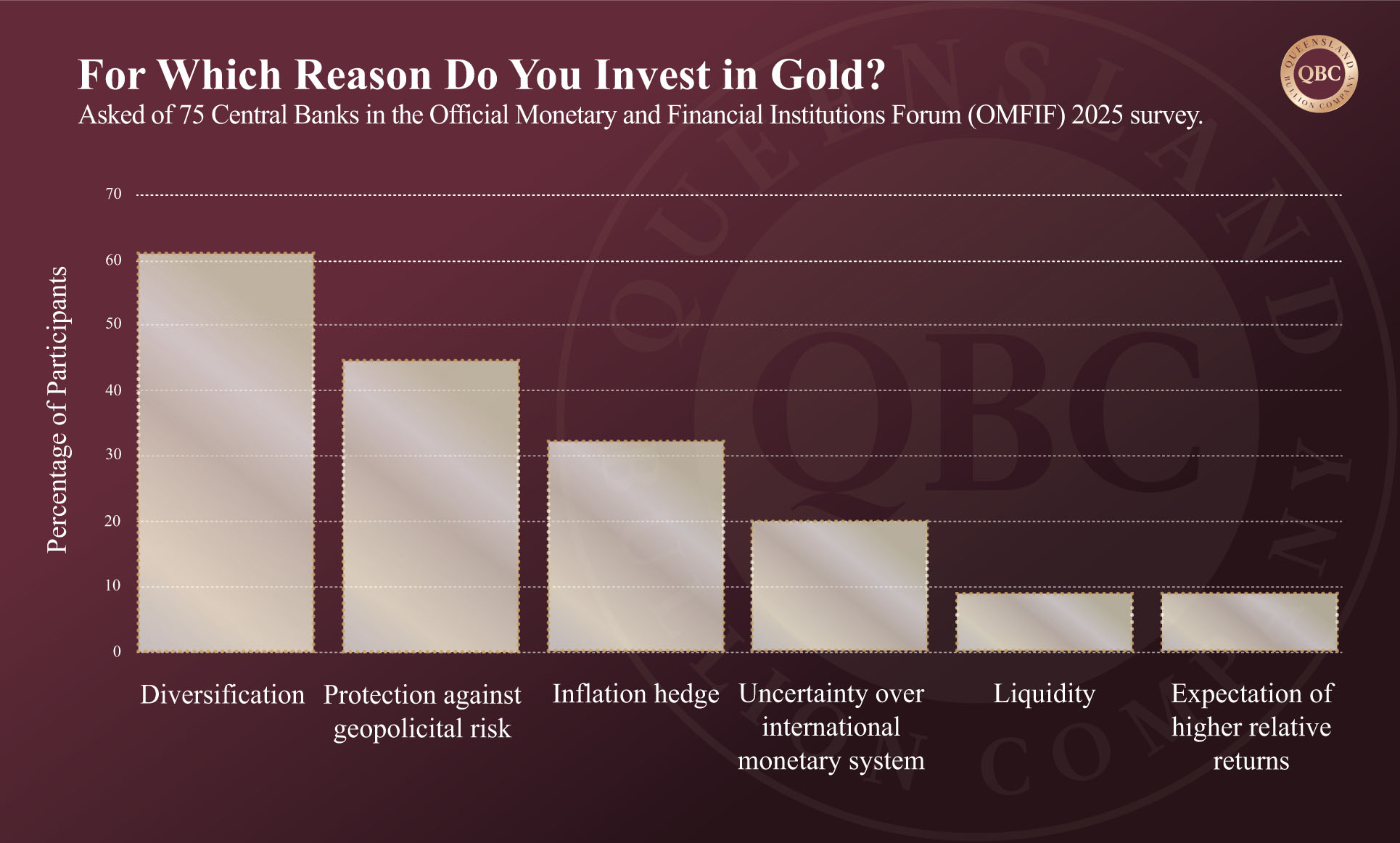
In just the first quarter of 2025, central banks purchased 244 tonnes of gold—25% higher than the five-year quarterly average. This follows three straight years of net gold buying above 1,000 tonnes.  Our previous article has already covered that 60% of reserve banks are accruing gold for the purposes of diversification (aka dedollarisation  or “monetary neutrality” for the BRICS nations).  Then they cite protection against geopolitical risk, and then as a hedge against inflation.

Central banks, unlike retail investors, are usually price-insensitive—they are more concerned with strategic allocation than entry level pricing. Their demand builds a strong price floor for gold and has become one of the clearest bullish fundamentals in the market.


5. Geopolitical Risk as the Wildcard

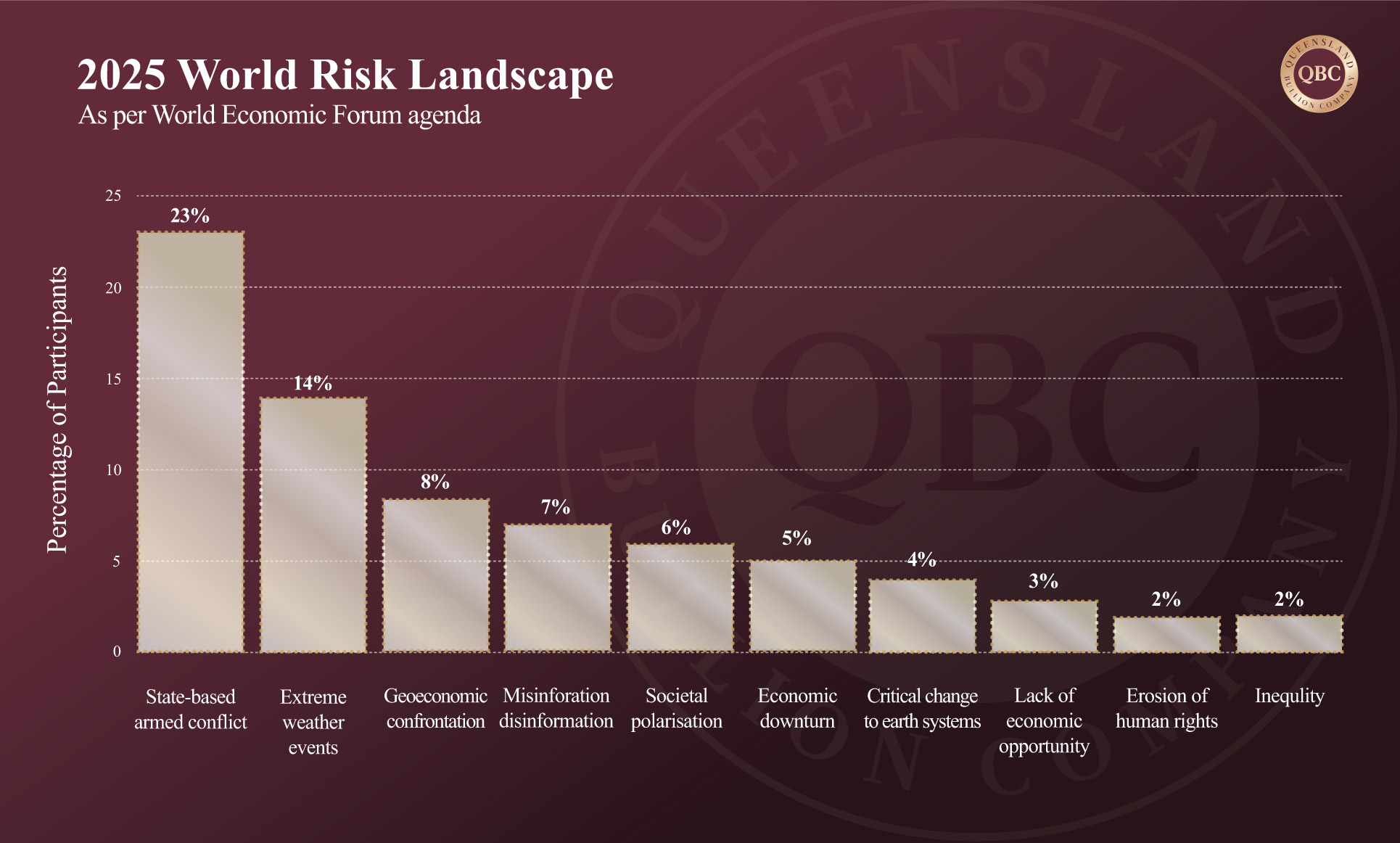
Geopolitical risks remain elevated in 2025, with ongoing conflicts and trade disputes posing threats to global economic stability. The World Economic Forum’s Global Risks Report highlights state-based armed conflicts as the top risk for the year, emphasising the potential for significant disruptions in trade and financial markets.

Such tensions can lead to increased market volatility and impact investor confidence worldwide. But investors in the precious metals market are familiar with why gold and silver are considered safe haven assets in times of uncertainty and prepare accordingly.


Positioning for What Comes Next

For investors who hesitate at current price levels, a prudent and diversified physical metals strategy is key.  The following multi-pronged approach to take advantage of the above fundamentals could include:

Dollar-cost average

Experienced investors know it is more important to accumulate according to financial capacity rather than trying to time the market to secure best prices.  Dollar-cost averaging—strategically buying during price dips—can help reduce the average cost per ounce, offsetting earlier purchases made at higher prices.  This can be an effective strategy if the market allows.


Prioritise insured storage

While securing bullion is a matter of preference, as prices rise risk tolerances can be eventually tested.  Geographic diversification of storage can minimise risk.  For example, you may be comfortable holding 100% of your holdings in a safe a home, but when it doubles in value you may prefer to move 50% of it to a private vaulting facility.


Favour physical over paper positions

“If you don’t hold it, you don’t own it” is certainly conservative, but when applied to the gold and silver paper futures markets it is on point.  The leverage on gold but especially silver paper contracts is eyewatering equating to millions of dollars’ worth of bullion with multiple claims against it.  The number of paper contracts taking delivery of the physical asset has escalated since America announced its tariff policy in April.  At some point, when the physical asset runs out, a very few will hold the metal and everyone else will be left holding the bag.


Conclusion
Each of these five macro catalysts is powerful on its own; together, they signal that the case for precious metals is not merely intact—it is strengthening. Whether it’s central banks, sovereign wealth funds, or retail investors—capital is clearly positioning for a world where volatility is the new normal and trust in fiat is rapidly being repriced.

In uncertain times, nothing is more certain than tangible assets. Gold, silver, and platinum aren’t just commodities—they are insurance against systemic fragility.

Posted on Leave a comment

RBA Rate Cuts Set to Change Financial Landscape

With expectations baked in for a Reserve Bank of Australia (RBA) rate cut next week, all eyes are on how this long-awaited monetary shift will reshape Australia’s economic landscape. The major banks are in rare alignment, unanimously forecasting a 25 basis point reduction in the cash rate—from 3.85% down to 3.6%—as inflation softens and household stress intensifies. There are even some analysts that suggest a 50 basis point reduction is possible this time around.  Markets are pricing in a 97% chance of this move.  The RBA rate reflects more than just market momentum.  It is are a mirror of Australia’s evolving macroeconomic reality.  Amid this transition, precious metals remain in sharp focus. At the time of writing, gold is trading at AUD $5,072, silver at AUD $56.11, and platinum continues its surge, now at AUD $2,112.


The Case for a Cut: Inflation Tamed, Growth Falters

The RBA’s mandate is to balance full employment with price stability, targeting inflation between 2–3%. With inflation now at 2.4%, within that comfort zone, and retail sales growth barely above zero, the path is clear for easing monetary policy. ANZ, NAB, Commonwealth Bank, and Westpac all project further rate reductions beyond July’s meeting, with some forecasts suggesting as many as four cuts by May 2026. The anticipation of weak wage growth, slowing job creation, and a deteriorating participation rate strengthen this argument. Meanwhile, GDP per capita has been declining for six consecutive quarters, marking the deepest real income per capita recession for a very long time. Against this backdrop, justification for monetary easing is a logical position.

Weakening AUD: A Tailwind for Precious Metals

As Australian interest rates decline relative to those abroad, our local currency tends to weaken. This is because a rate cut makes Australian assets (such as Treasury bonds) less attractive to foreign investors, who then seek higher yields outside of Australia. Reduced investment capital inflows combined with increased outflows is one element that pushes the currency downward; however, there are multiple facets that combine that affect currency movement.

Because the American Dollar is the currency that precious metals are priced in, it is important to also consider USD’s position.  The Greenback is in a downward spiral compared to other currencies including our own.  Aggressive fiscal policies, rising debt, trade policies and tariff uncertainties, international shifts toward de-dollarisation, lack of investor confidence and how this affects capital flows all play a role in weakening the dollar. 

Both reserve bank rate cuts and the moving of the USD is important to factor in when considering the Australian dollar and its effect on precious metals prices.  Precious metals have historically outperformed during such currency devaluations—both as inflation hedges and stores of value when fiat confidence erodes. For investors holding physical bullion in Australian dollars, a falling AUD boosts returns even if global spot prices remain flat.

Property’s Artificial Revival: Short-Term Relief, Long-Term Risk

While a rate cut will offer welcome relief to mortgage holders—saving approximately $90 a month on a $600,000 loan—it is also likely to reignite speculative heat in the housing market. Research suggests a 0.25% rate cut can lift property prices by 1.5% to 2% within a year. With housing supply constrained and affordability stretched, this risks deepening the divide between asset holders and younger Australians priced out of the market. It also highlights the fragility of a property market reliant on low interest rates for price support. Lower rates may buy time, but they do not resolve structural imbalances. Investors should therefore consider diversifying into hard assets with a different risk profile—particularly as debt burdens and global volatility mount.  When the property market finally corrects, capital will leave this sector and look for another venue to both preserve wealth and continue growth. 

Why Now Is the Time to Buy Gold, Silver, and Platinum

The anticipated rate cut marks more than a tactical shift in policy—it is a signal that Australia’s monetary authorities are preparing for an extended period of a softer economy. With central banks worldwide still buying gold—32% planning to increase reserves in the next year—and with physical shortages emerging in both silver and platinum markets, the case for owning precious metals has never been clearer. Add to this the RBA’s likely reluctance to provide forward guidance, and investors are left to navigate uncertainty with limited visibility. In this environment, physical gold, silver, and platinum offer the one thing the broader market cannot: simply stability. They are not just a hedge against rate cuts or currency weakness—they are protection against a system increasingly reliant on monetary intervention for survival.

As we often tell our clients there is nothing more certain in an uncertain world than precious metal.

Posted on Leave a comment

The West’s Financial Challenges are Structural, Not Situational

Markets continue to react to every diplomatic ripple in the Middle East, pricing gold up or down depending on the headlines of the day. But while newsrooms focus on missiles and ceasefires, a deeper crisis continues to unfold in the background—one that will shape the future of fiat currencies and precious metals alike. From spiralling sovereign debt to persistent supply deficits and fragile delivery mechanisms, the evidence points to a fundamental, structural strain underpinning today’s global economy. Geopolitical tension may be the match, but the kindling has long since been laid. As one seasoned analyst noted recently: “If you’re waiting for gold to collapse once the Middle East quiets down, you might be missing the bigger picture.”  With gold trading at AUD $5,038, silver at AUD $55.98, and platinum at AUD $2,123.49, let us explore why the structural health of the financial system does not need a bomb in order to rupture.


Debt Crisis

As far as potential catalysts go for financial shakedowns, one of the most pressing structural fault lines in global markets today is debt. According to the Institute of International Finance, global debt has now reached an eye-watering $325 trillion, representing 328% of world GDP—a record. This isn’t merely a by-product of recessionary cycles or COVID-era stimulus; it is a long-standing trajectory embedded in Western fiscal planning. Ray Dalio, founder of Bridgewater Associates, warned just weeks ago that the U.S. faces a “debt-induced economic heart attack” if current trends persist. Most notably, U.S. interest payments now exceed defence spending—a staggering milestone for the world’s largest economy. The debt ceiling has become a floor which has become the baseline expectation for government spending. For investors, this undermines faith in fiat currency systems and highlights the appeal of tangible, non-counterparty assets like gold and silver. The Federal Reserve’s swollen balance sheet, combined with sticky inflation, suggests that central banks are trapped between credibility and solvency, a problem that ultimately cannot be printed away like so many other fiscal and financial problems.


Silver and Platinum Supply Deficits

Silver and platinum both entered structural deficits years ago—an imbalance long underreported by official figures. Since 2021, silver demand has consistently outpaced supply driving prices over 50% higher. While the Silver Institute projects a slightly narrower deficit in 2025—117 to 118 million ounces, down from 148.9 million in 2024—these numbers exclude key emerging sectors. Military demand remains unquantified.  Indicators for this use remain opaque at best and is estimated to amount to up to fifteen times more than any other industrial application. Likewise, silver’s expanding role in emerging industries such as aerospace, AI, robotics, and solid-state batteries is inadequately captured in conventional forecasts. Platinum faces similar dynamics: a two-year supply shortfall of nearly one million ounces persists despite growing industrial and green energy demand. As hydrogen cell vehicles enter the mainstream, platinum’s role has become increasingly strategic. With 90% of global supply coming from geopolitically sensitive regions like South Africa and Russia, the risk of supply shock is high—and rising. Investors should take note: these are not temporary bottlenecks, but long-term mismatches between available resources and accelerating use cases.  Read more about platinum here.


Gold and Institutional Buying

While silver and platinum gain industrial-use momentum, gold remains the reserve asset of choice for institutions. According to the latest Official Monetary and Financial Institutions Forum (OMFIF) survey, 32% of central banks intend to increase their gold holdings over the next 12–24 months—the highest conviction rate in five years. This is not a short-term trade. The reasons are clear with the first priority being diversification, then hedging geopolitical risk, and then protecting against inflation. For the fourth consecutive year, analysts expect central bank gold purchases to exceed 1,000 tonnes. This sustained and deliberate accumulation reflects how gold is not just seen as a wealth preservation tool, but increasingly also as a protection against future instability. What is striking is how quietly this repositioning is occurring. While retail investors chase headlines, central banks are rebuilding their balance sheets with physical bullion. This suggests an enduring revaluation of gold’s role not just as a crisis hedge, but as a strategic reserve asset. Institutional demand does not chase price; it sets the floor beneath it.


The Silent Precious Metals Crisis

Beneath the surface of daily spot movements lies a more alarming trend: the growing disconnect between paper and physical precious metals markets. In Q1 2025, only 1.2% of COMEX gold and 0.9% of silver futures contracts ended in physical delivery. Meanwhile, May 2025 saw a staggering 16,200 silver contracts—equal to 81 million ounces—stand for delivery, consuming 16% of registered COMEX inventories. This is the highest delivery-to-stock ratio since 2008 and signals serious stress within the system. Alarmingly, 23% of silver delivery requests were redirected to cash settlement, up from 12% in 2024. This means the warehouse system cannot reliably meet physical obligations. Adding to concerns, 84% of silver futures are held by a handful of commercial traders—primarily investment banks—who dominate spread trading and price discovery. The $920 million JP Morgan spoofing settlement resolved only 0.3% of the firm’s alleged manipulative trades executed between 2015-2020, underscoring the depth of systemic vulnerabilities in precious metals paper trading. The illusion of liquidity in the paper market masks an increasingly illiquid physical reality—a dangerous divergence for any asset class, but especially for metals regarded as trust anchors in uncertain times.


Conclusion: Structural, Not Situational

Markets will always respond to geopolitical shockwaves, but the deeper story is the slow-motion erosion of economic foundations. The West’s financial challenges are not about any single war, central bank statement, or election cycle; they are the cumulative result of structural imbalances—runaway debt, overstretched supply chains, institutional manipulation, and a global pivot back to tangible assets. Precious metals are not spiking or softening solely because of crisis headlines; they fluctuate because the scaffolding beneath fiat currency systems is beginning to creak. Investors who understand this distinction—who look beyond the noise and into the bedrock—are those best positioned for the decade ahead. In this environment, gold, silver, and platinum are not just hedges. They are a means to survive and thrive.

Posted on Leave a comment

Penchant for Platinum?

While gold and silver have dominated headlines with strong year-to-date performances, platinum has quietly surged into focus. The metal has climbed an impressive 45% this year, with a 23.5% rise just this month alone. At the end of May, platinum traded at AUD $1,624 and now sits at AUD $1978. With gold currently trading at AUD $5,187 and silver at AUD $56.27, investor enthusiasm across the precious metals space is well-founded—and platinum may be the one to watch next.


What is platinum?

Like gold, platinum is a Noble Metal and sits beside it on the Periodic Table. It boasts a melting point of 1,768°C (compared to gold at 1,064°C), exceptional resistance to corrosion, remarkable chemical stability, and is the most ductile of all pure metals. Its utility spans far beyond bullion, with critical industrial applications in the automotive sector, catalytic converters, laboratory equipment, glass manufacturing, dental instruments, electrical contacts, and thermometers. Because of this, platinum is highly sensitive to economic cycles—more so than even silver—and consequently, is the most volatile of the three major investment metals.

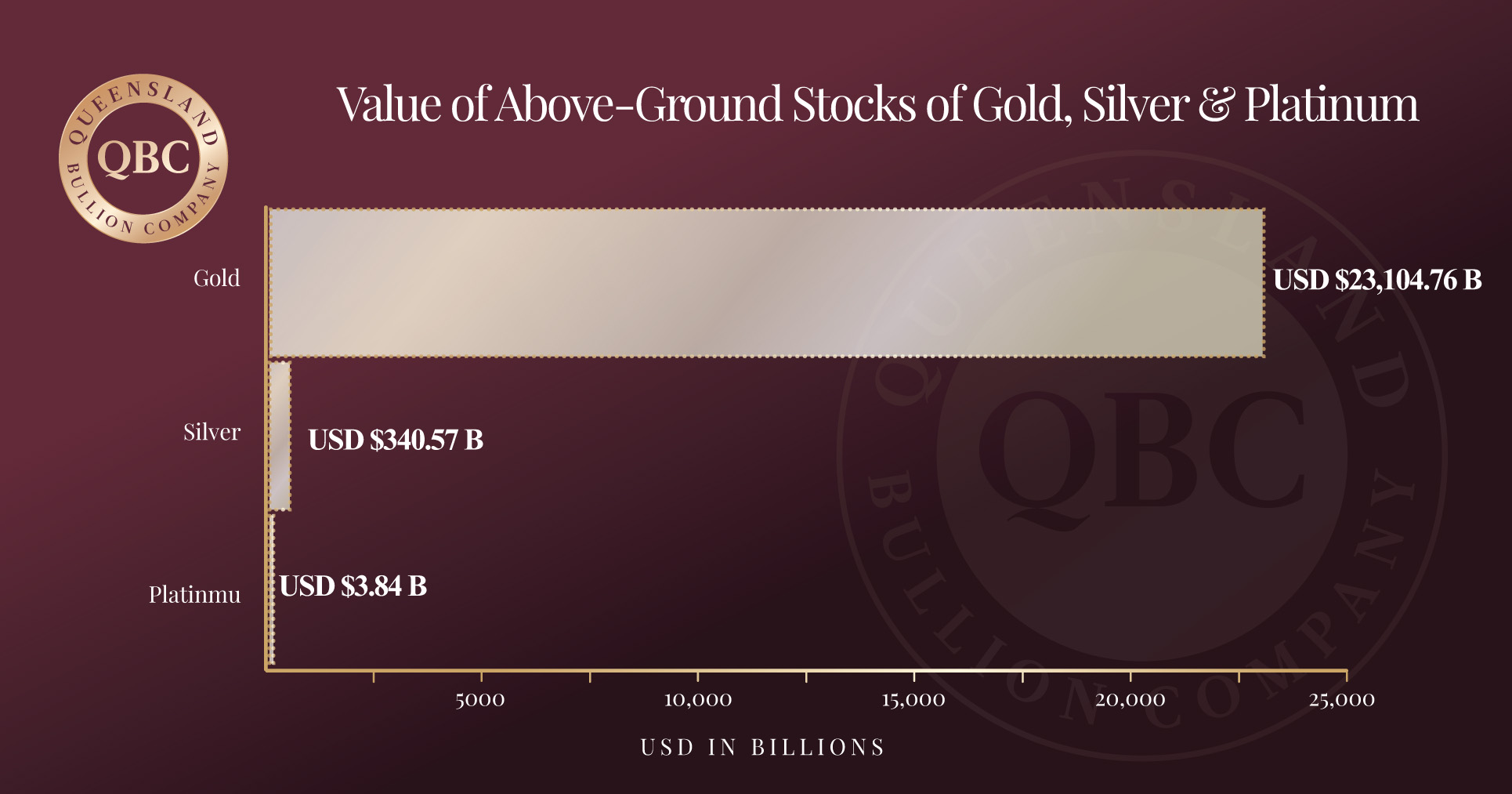
Another key factor in its volatility is the size of the market. Above-ground gold is valued at approximately USD $23.1 trillion, silver at USD $340.6 billion, and platinum at just USD $3.84 billion. That means even modest flows of capital into platinum can have an outsized impact on price. While this can generate strong gains during bullish conditions, it also increases downside risk in a correction. The price swings cut both ways.

Platinum is not a monetary metal

Unlike gold and silver—which have served as stores of value for more than 5,000 years—platinum has a far shorter monetary history. Though first referenced in Europe in 1557, it was not truly understood until the 18th century. Today, only 8% of platinum demand comes from investment, with 67% tied to industrial use and 24% to jewellery. This makes it more exposed to production cycles and commodity flows than sentiment-driven safe haven demand.


The platinum deficit

For the past three years, global demand for platinum has outpaced mine supply, tightening the market considerably. Over the past two years alone, the shortfall has totalled nearly one million ounces. This tightening is one of the key reasons platinum is now entering what appears to be the early stages of a bull run.

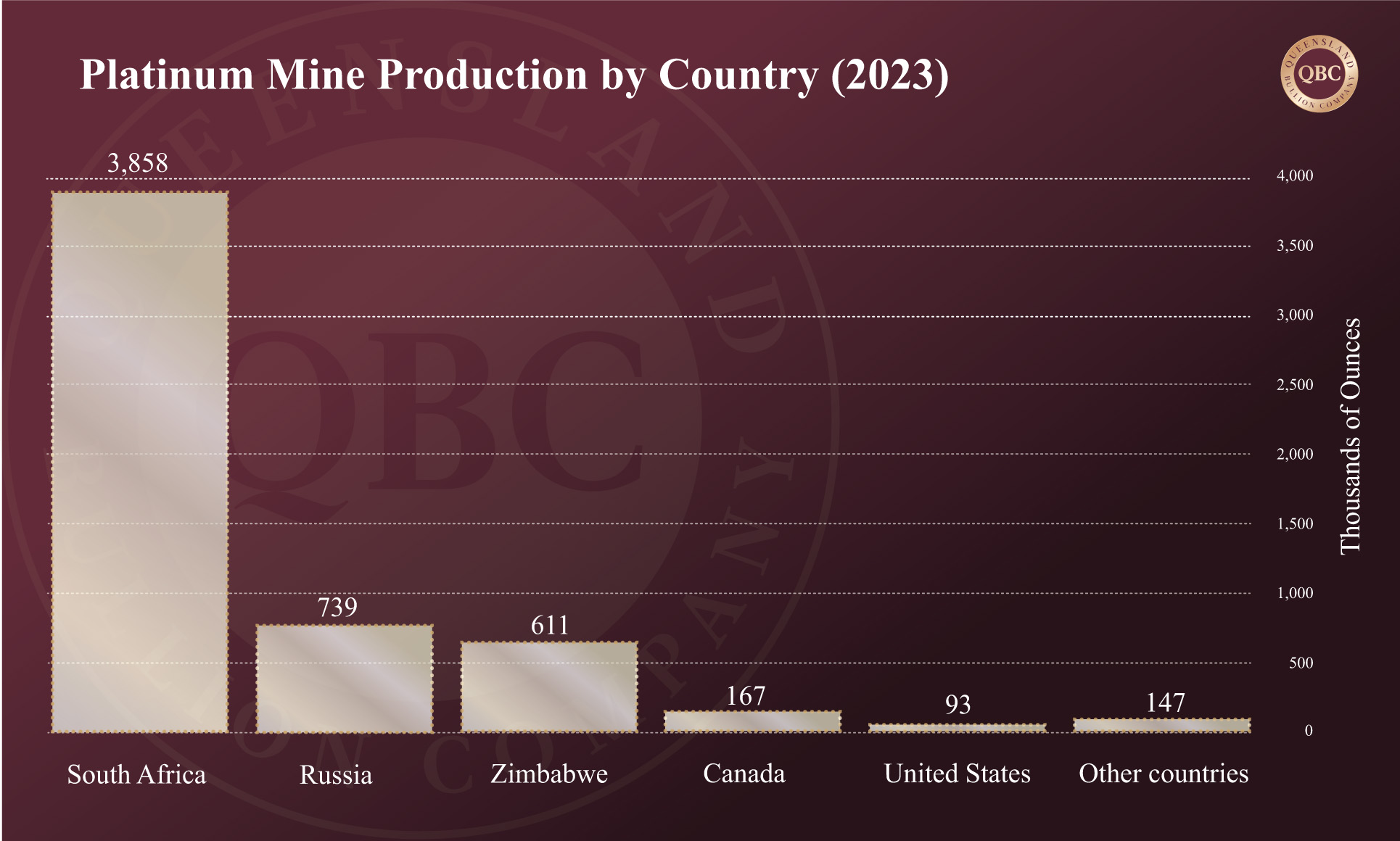
The causes of this deficit, however, are complex. Roughly 90% of global platinum supply comes from just four nations: South Africa, Russia, the United States, and Canada. As shown in the chart below, the BRICS-aligned countries dominate global reserves, exposing platinum to a unique mix of geopolitical risks. Sanctions against Russia have strained supply chains, while South Africa faces persistent challenges—rolling blackouts, labour unrest, rising costs, declining ore quality, and underinvestment. The result is a squeeze on supply just as demand begins to recover.

What this means for the price of platinum

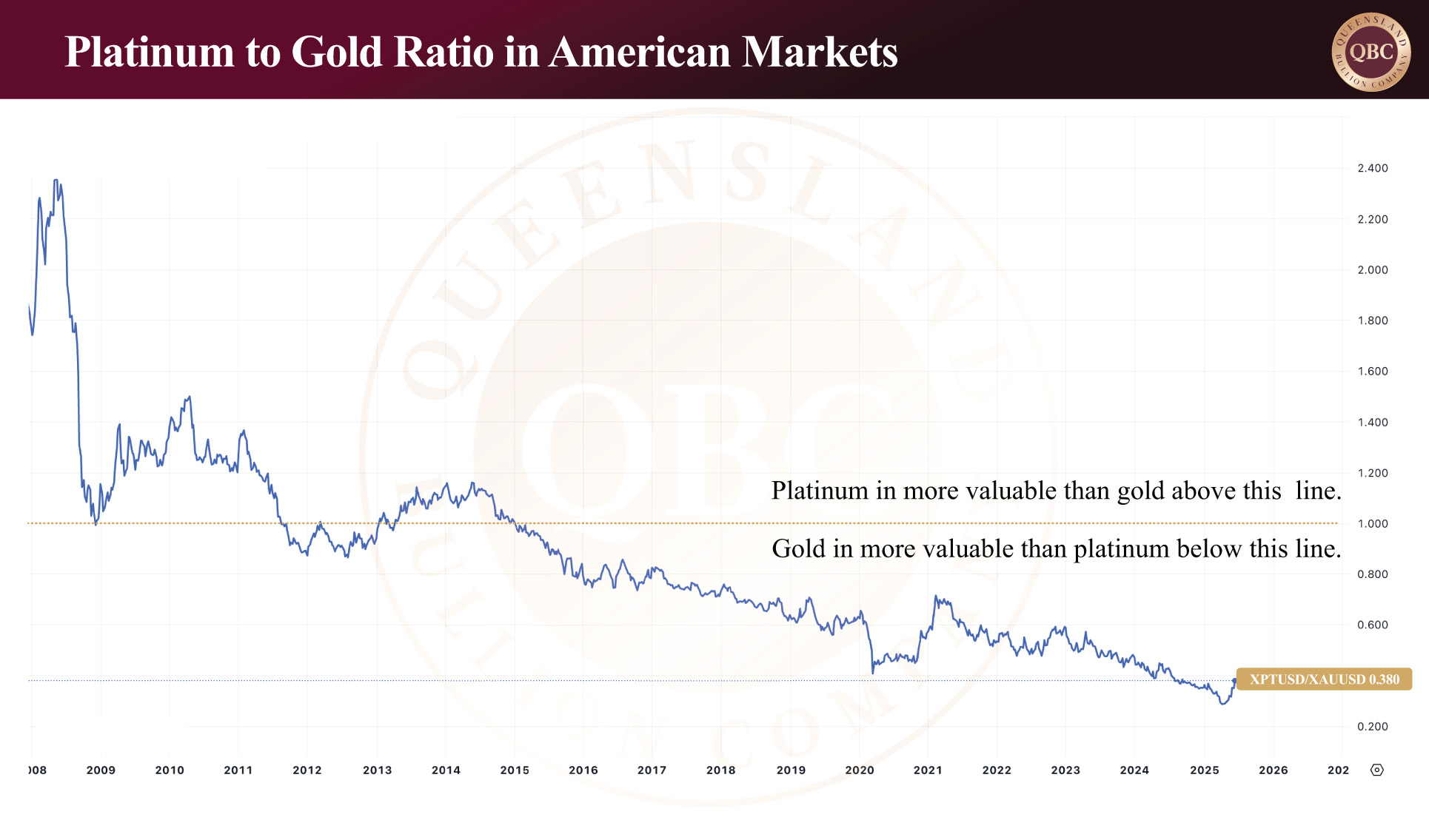
Platinum holds a distinct place in any diversified metals portfolio. While gold offers long-term security and silver provides disproportional upside in a bull market, platinum straddles the middle ground. It shares gold’s density and storeability, but historically was twice the price of gold. Today, the gold-to-platinum ratio stands at 1:2.6, highlighting a major reversal in valuation. Platinum is also thirty times more rare than gold—yet trades at a steep discount.

With deficits mounting and supply chains under pressure, platinum may represent one of the most undervalued opportunities in the market today. For investors with an established position in gold and silver, and the appetite for a higher-risk, higher-reward play, platinum deserves serious consideration.