Posted on — Leave a comment

Trump Tariffs: Gold Currently the Only Winner

Liberation Day has been declared by President Trump in America and the global fallout has been swift and significant.China has met America and imposed their own 34% retaliatory tariff on all US imports, a move that some analyst fear could lead to a fully-fledged international trade war.With gold trading at $4,957, silver at $50.00, and platinum at $1,519, it is clear what asset class has benefited the most from the confusion and turmoil.

Stock market fallout: statistics to date

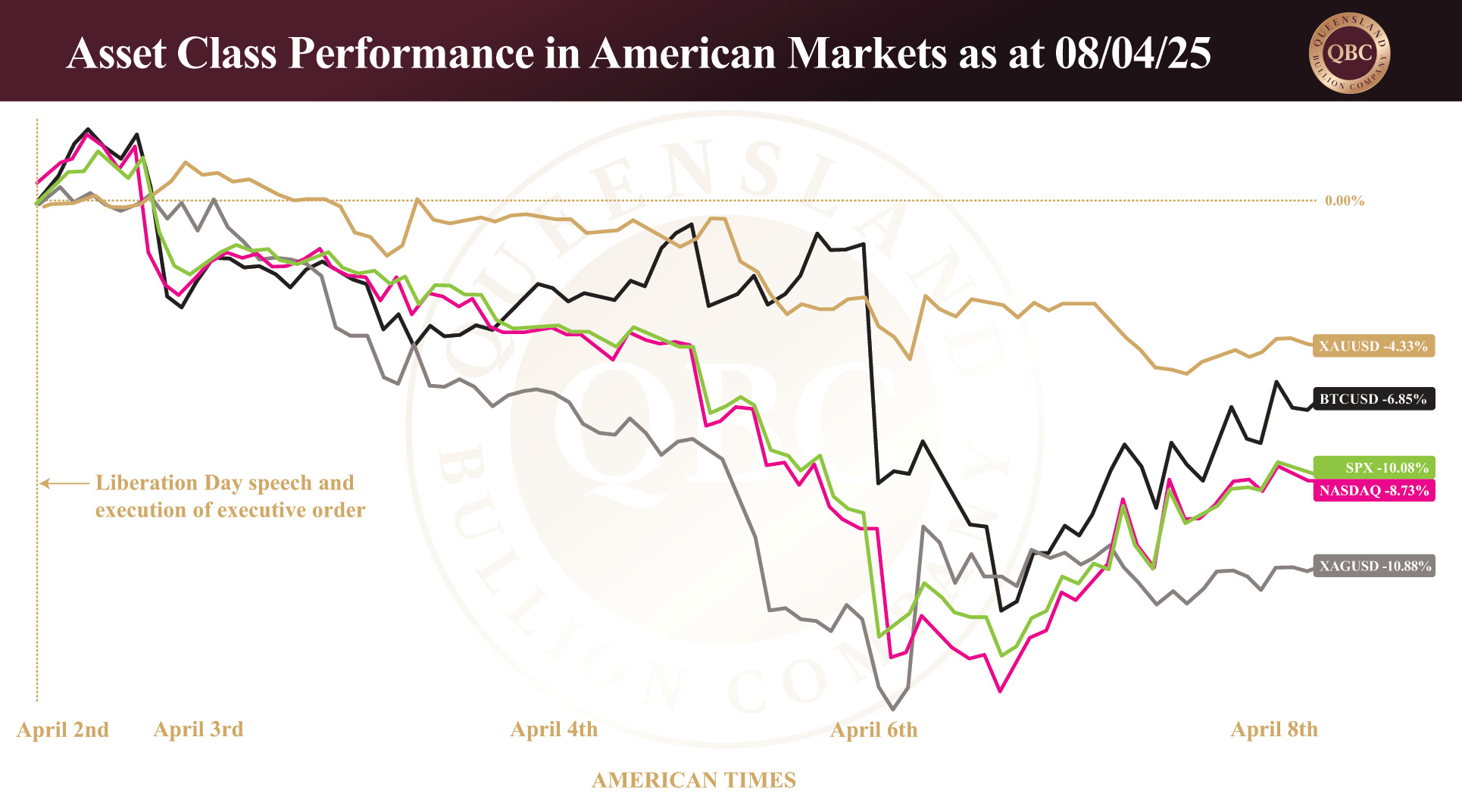
Since the Liberation Day executive order was announced, American markets experienced a downward trajectory, however this morning has seen the first signs of recovery across various sectors.  This afternoon the S&P 500 (the broadest benchmark of largest-capitalised companies) experienced an 10% decrease.  Bitcoin is down 6.8%, the NASDAQ (tech stocks) has slumped 8.7%, and silver has been hit the hardest sliding backward by 10.8%.  Gold held its value the best dropping only 4.3%, hence providing the best purchasing power of all asset classes affected by the harsher-than-anticipated tariffs.

Precious metals fared much better in Australian markets due to the USD to AUD exchange rate with the Australian dollar losing value during this time.  Silver dropped 7.1% and gold is down only 0.1%.  Again, those holding precious metals locally will have maintained better purchasing power than their American counterparts.

Below is a graph illustrating how each asset has performed since the Liberation Day speech.
 

Historical precedent: 1987

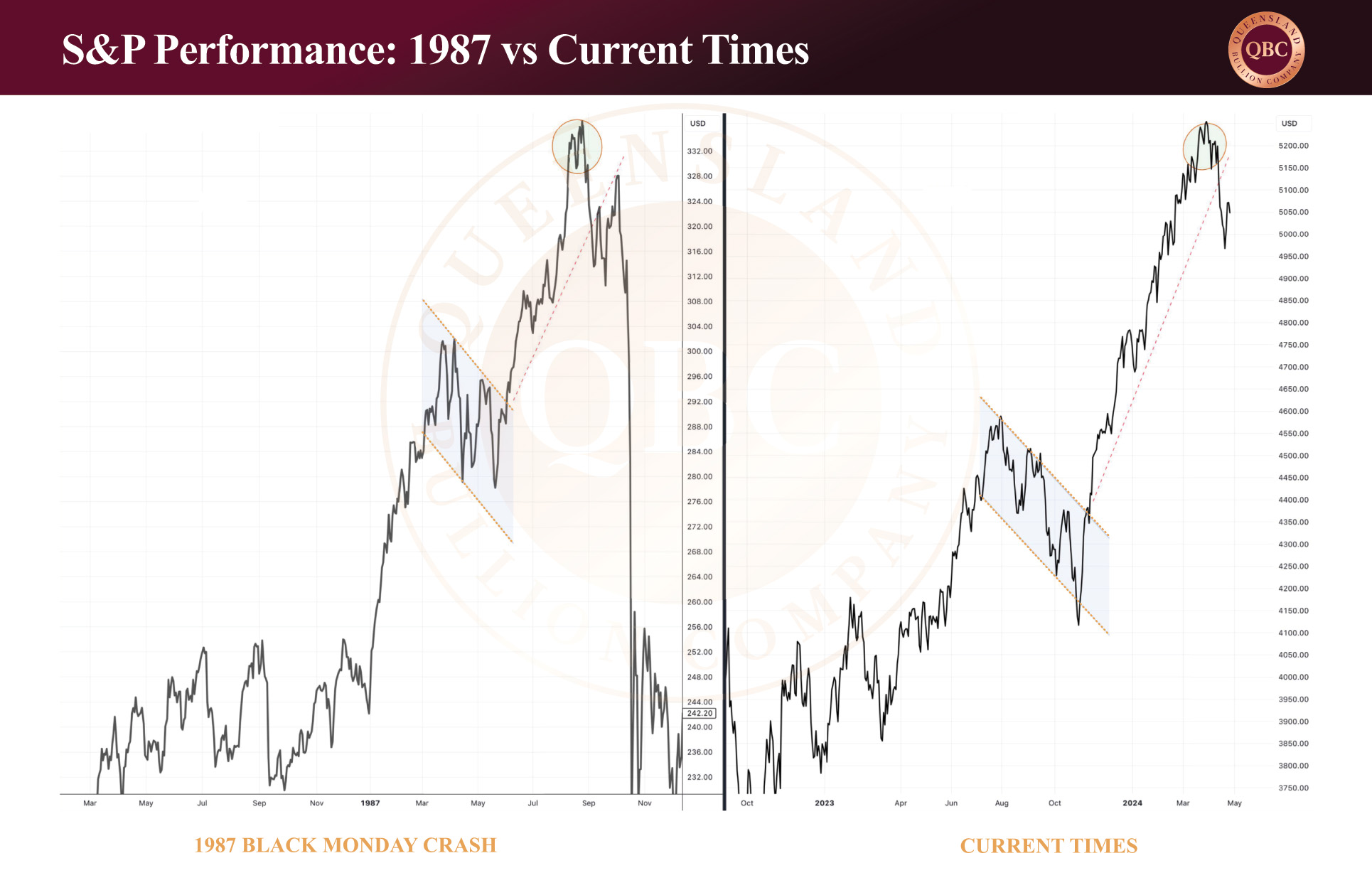
Many analysts are comparing current events to the crash in late 1987.  This is because graphs from the 1987 Black Monday event are eerily similar to now.  Black Monday is an important historical marker because it highlighted how globalisation, a new concept at the time, impacted the international markets and illustrated how interconnected financial sectors had become.  The events preceding the Black Monday crash included a massively over-valued stock market, persistent US trade and budget deficits, and rising interest rates.  Today America matches the same description except the Federal Reserve interest rate is only 4.33%, whereas it was 6.5% in 1987.  While it appears that the interest rate is lower today, keep in mind that it exists in the context of quantitative easing where the share market is hooked on easy money- hence, 4.33% could be seen as larger burden to bear for the current institutional investors than 6.5% back in the 1980s.  Below is a graph of the S&P 500 at the time of the Black Monday event versus today.

What is important to note about the 1987 Black Monday crash is that the aftermath did not include a recession.  The stock market continued its strong upward trend until the dot-com crash in 2000.  Alternatively, the Great Depression of 1930 saw a severe global economic downturn with a stock market crash that continued through the 1930s that was marked by high unemployment, poverty and business failures at large.  So what is the likelihood of recession in 2025?  Goldman Sachs has raised the odds to 45%. Polymarket, an American betting platform for investors, has the odds at 62%.  If the Federal Reserve does enter a rate cutting cycle as is now anticipated, the probability could grow.  They will not, however, have an early decision with inflation remaining first priority for the Fed.

How does gold and silver behave in a crash?

Gold and silver are subject to macro-economic influences and competes for capital against other asset classes in volatile trading periods as well as in times of economic growth.  The current decline in value is to be expected in all markets, including the precious metals.  This is due to the extreme uncertainty in how things can unfold in relation to trade, investor debt obligations and their ability to close short positions in a falling market, political implications, and on it goes.  Like other assets, precious metals historically decline in value at the beginning of a crash; however, as investors look for safety gold (followed by silver) will decouple and start a new upward trajectory as capital flows into safe-haven assets.  Seasoned investors will see this decline as an opportunity to dollar cost average prior to the value moving back up.
Posted on — Leave a comment

Trump’s Liberation Day Executive Order Spells Volatility for Precious Metals

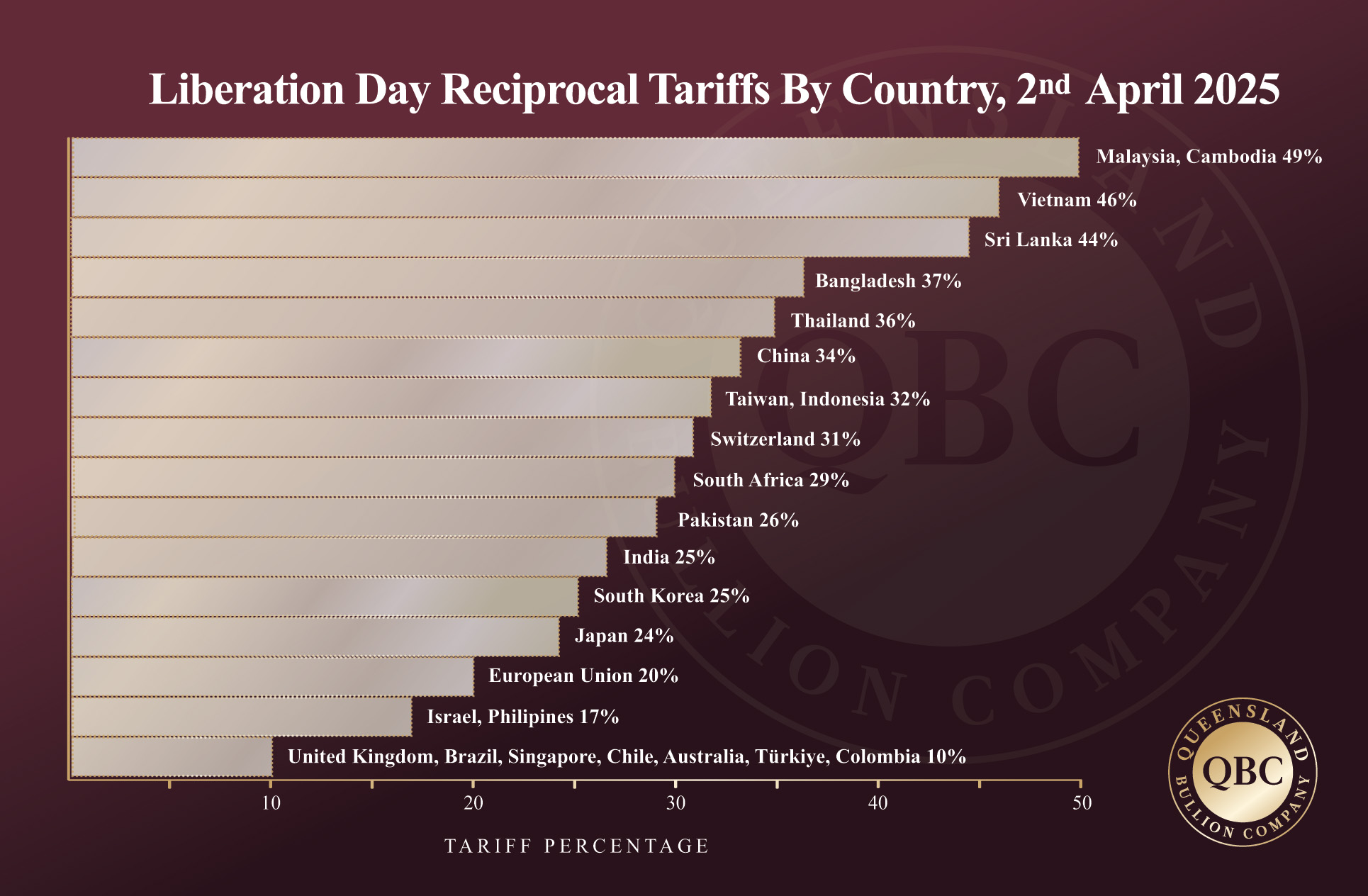
President Trump has finally revealed his latest Executive Order branded as part of his “Make America Wealthy Again” campaign.  Chart in hand, he spoke in the White House Rose Garden of a baseline 10% tariff plus any additional reciprocal tariffs applicable to multiple countries.  Both gold and silver whipsawed up and down as he spoke, with both up about half a percent by the end of the speech. With gold trading at $4927, silver at $50.71, and platinum at $1512, the last twenty-four hours has seen volatility in each market.

Tariff turmoil

President Trump did not stop at an additional 10% tariff on every nation in his bid to make America wealthy again.  He also announced reciprocal tariffs that would be imposed in addition to current tariffs that are in place.  For example, China already has a 20% tariff imposed on its exports to the United States.  They now have an additional 34% of reciprocal tariffs assigned to them making the total rate a massive 54%.  Below is a table outlining reciprocal tariffs for countries of interest.


liberation day tariffs

Keep in mind that tariffs will also affect the competitive edge for certain items exported to America.  In the instance of Australian wine, the price just increased by 10% for American consumers; however, the price of European wine has increased by 20%.  So while demand may soften in American markets due to higher prices in general, certain products could maintain a competitive edge according to country of origin and the associated tariffs.

Financial fallout

The financial fallout concerning the tariffs will play out over months.  Expect retaliatory tariffs, supply lines to be disrupted and redirected, and a softening in consumer demand to eventuate in response to the “Liberation Day” trade policies.  What is evident now, though, is that it will affect central bank decision making regarding interest rates.  Local analysts are certain that the Reserve Bank of Australia (RBA) will now facilitate up to four rate cuts this year in total (as opposed to two or three prior to Trump’s new executive order).  Indeed the RBA governor, Michele Bullock, has confirmed the board is open to rate cuts as a response to the consequences of tariffs if needed.  Similarly, traders also expect the US Federal Reserve to make three quarter-point reductions by October.  This is significant because of what it implies regarding recession. We have covered this topic in a previous article but to recap, successive rate cutting cycles are often seen as an indicator of a recession to come.  Indeed some analysts have indicated that the likelihood this year is as high as 50% according to institutional banks including Goldman Sachs, JP Morgan and Deutsche Bank, and betting agents alike.


The implications for gold and silver in Australian markets

This kind of financial turmoil is always good for safe haven assets such as the US dollar, gold and silver.  For as long as the tariffs are implemented the slowdown in consumer spending world-wide is an obvious outcome while the market adjusts.  A slowdown in China could possibly mean a reduction in the Australian dollar (known as the Commodities Currency).  As the AUD devalues the price of gold and silver increases in the Australian market.  When you combine the impact of a potentially weaker local currency with the global market conditions of financial uncertainty, the likelihood of geopolitical conflict somewhere in the world (take your pick), multiple asset bubbles, and the various debt burdens among institutional bodies and consumers alike, it paints a picture of troubling times and stormy clouds.  The only lining to these clouds is in the form of gold and silver. Protection of assets and wealth, no matter how large or small, requires preparation. Those holding gold and silver will outperform during these times.

Posted on — Leave a comment

West Gears Up for World Wide War

In an effort to “give EU citizens peace of mind” the European Union (EU) has just asked 450 million people to stockpile seventy-two hours’ worth of emergency stockpiles that are being referred to as “war supplies.”  This is the European backdrop that sees gold and silver hit all-time highs in the Australian market.  Gold currently trades at $4,856, silver at $54.91, and platinum at $1,571, and it seems the global geopolitical climate just increased the possibility of another run on gold and silver, albeit the timing is still in question.

According to the press release issued by the European Union, the reasons cited for such action include growing geopolitical tensions and conflicts, hybrid and cybersecurity threats, foreign information manipulation and interference, climate change, and natural disasters.  Naturally Russia did not escape mention with the EU referring to the full-scale war in Ukraine as one of the reasons.  In making the announcement, representatives of the EU mentioned that luckily they are not starting from scratch and that the Covid 19 Pandemic era was an experience that has already proven the value of “working together in solidarity and coordination within a EU framework [that] makes us more efficient.”  Interpret the EU’s messaging and potential social engineering efforts as you will.

Meanwhile in America, from his International Golf Club in Florida, President Donald Trump announced a series of attacks on Houthi rebels in Yemen.  The airstrikes killed fifty-three people as the President promised to use “overwhelming lethal force” until the Iran-backed rebels cease their attacks on shipping along a vital maritime corridor.  The attacks came a few days after the Houthis said they would resume retaliations on Israeli vessels sailing from Yemen. The Houthis justify their actions based on Israel’s blockade in Gaza.  Moreover, Washington has confirmed that every shot fired by the Houthis will be seen as a shot fired by Iran.  Is Washington preparing its citizens for further, more significant attacks on Iranian infrastructure through this antagonistic rhetoric?

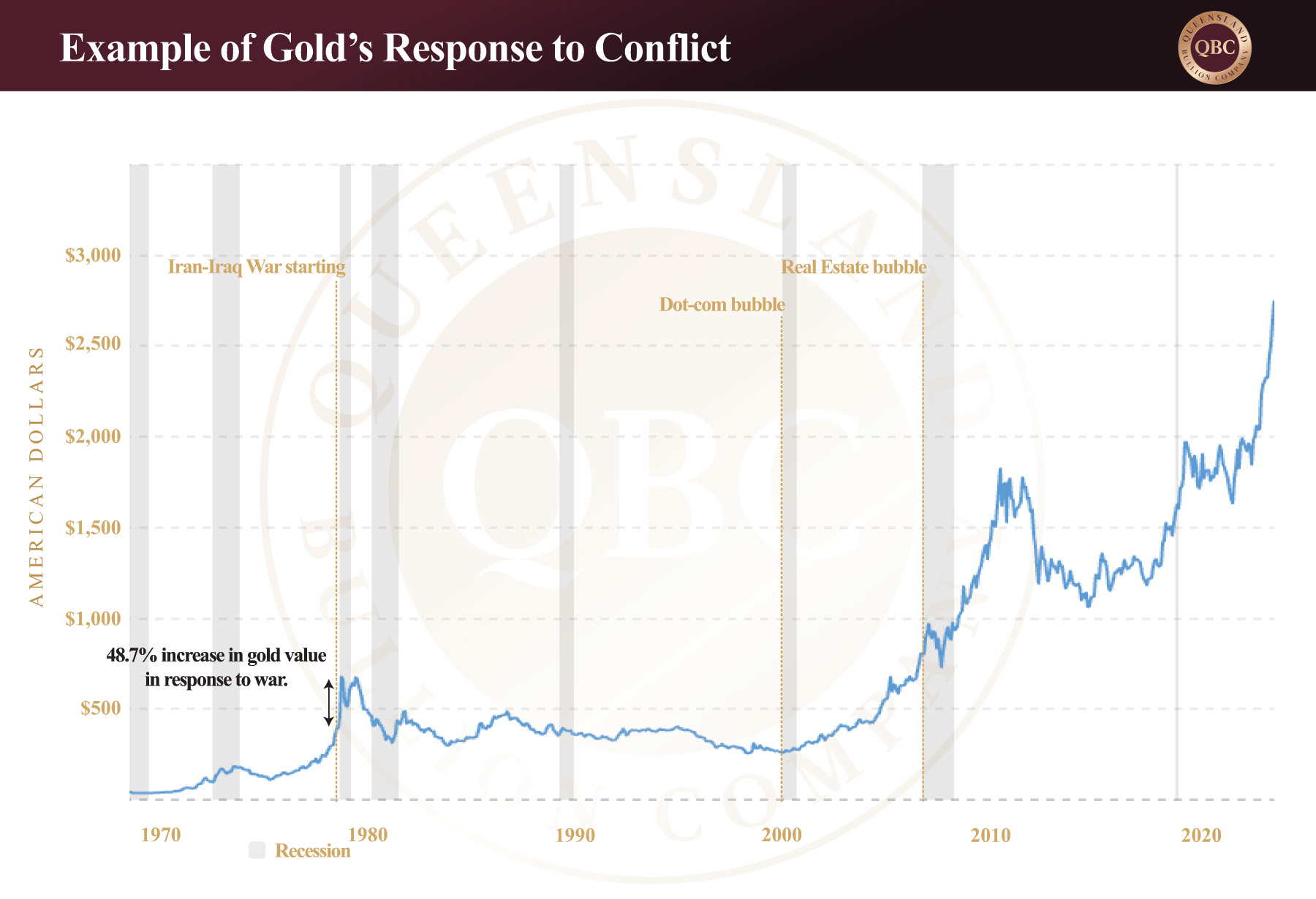
In just days it appears the West has ramped up for a potential global conflict. This is not the first time and history has valuable lessons for those who look.  If we refer to the Iran-Iraq War which started in 1980, there was a sharp spike in the price of gold to the tune of 48.7% in a matter of months as it rose to USD $677.97.  In US Dollars, gold then experienced massive volatility over the next decade and eventually went sideways until the early 2000s.  In this time America conducted two operations against Iran (Operations Ernest Will and Praying Mantis) and experienced high inflation.  Below is a graph illustrating how global conflict is a factor that directly correlates with spikes in gold value.

Conflict in the Middle East, high inflation, and volatile markets- anyone would think we were describing current events, not events from the 1980s.  This time the difference is that a potential war in Europe is also on the cards. Just as the current stock market reflects a bubble in both real estate and tech stocks (read more about this here), multiple regions are shaping up to be the catalyst that could spark global conflict.  The result is a perfect environment to facilitate a major shakedown in the financial world with dire repercussions, one that we may not have seen the likes of for one hundred years.

As the likelihood of geopolitical conflict ramps up, investors are looking to store wealth in safe haven assets such as the American Dollar, gold and silver.  This may be why gold has not yet tested its new support at USD $3,000.  While investors may not be able to affect the probability of war or a financial crash, they can prepare in order to place themselves and their loved ones in the best possible position to deal with such circumstances should they arise.  Investing in gold and silver prior to conflict or financial instability is the best time to ensure wealth protection and even prosperity in a future full of uncertainty.

Posted on — Leave a comment

Is It Better to Hold Cash or Gold in 2025?

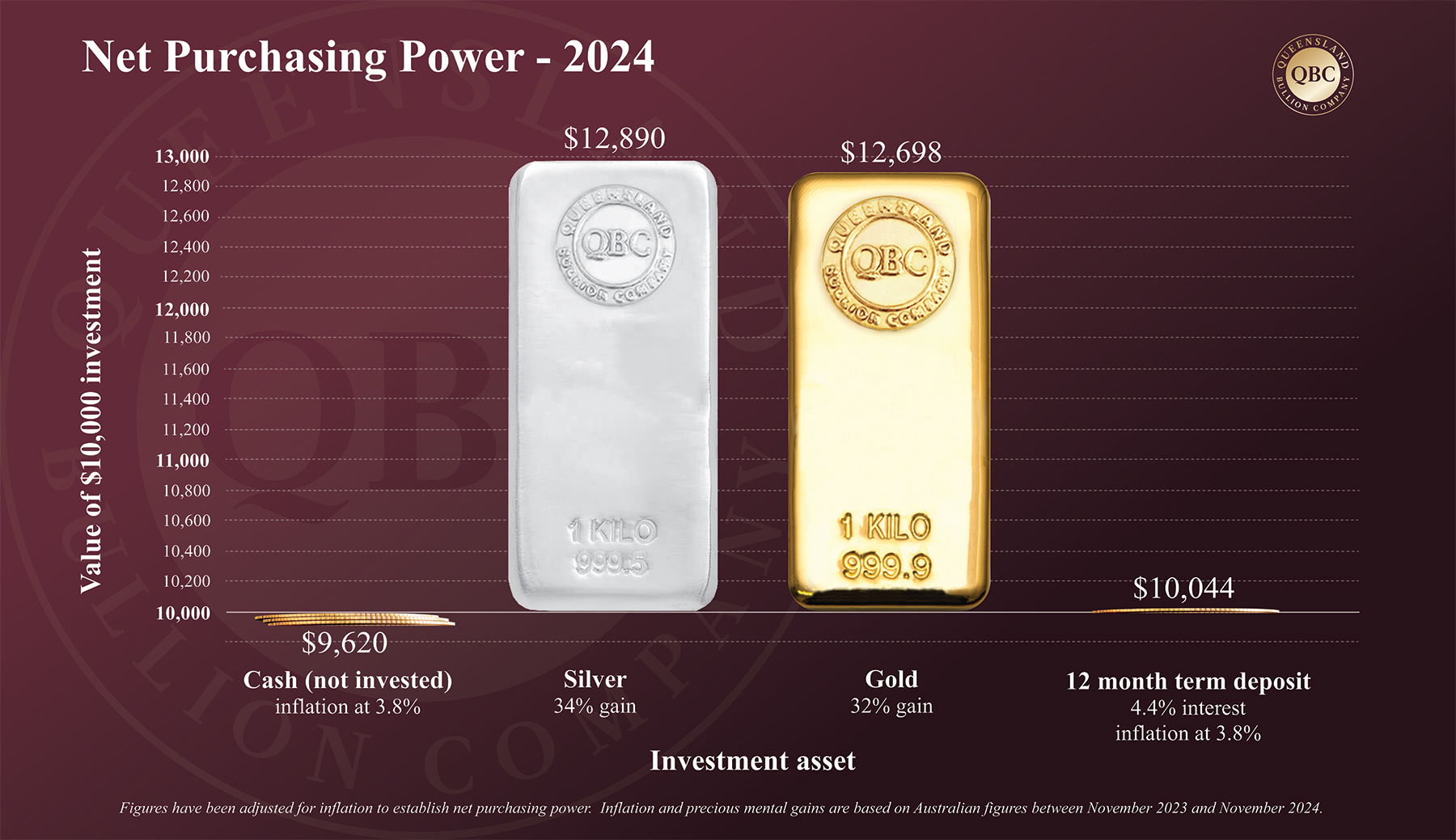
In the current economic landscape, investors are increasingly asking whether they should hold their wealth in cash or whether gold bullion is a better option. While both have their place in a diversified portfolio, gold offers several compelling advantages. From a strictly financial perspective, the graph below from 2024 illustrates how gold and silver provide the best gains.

There may be other considerations on an individual basis. Below is a broad summary of some advantages and disadvantages of wealth storage options. It is important to remember that while we can provide general education, you are best to consult with your financial advisor for specifics for your circumstance.

Cash Options and Their Limitations

Cash in a Bank Account

The average Australian savings account currently offers interest rates around 0.5-1.5%.  At present, this fails to keep pace with inflation. This means your money is actually losing purchasing power over time.

Physical Cash at Home

Having some emergency cash on hand might give you added short term security in a crisis. It can also help to make buying some items for cash simpler. However, keeping significant amounts at home offers zero growth potential. You also open yourself to potential security risks. Cash held at home or in a safe also steadily loses value to inflation.

Term Deposits

Even with better rates of around 4-5% on term deposits, these barely keep pace with inflation. You also need to report on interest received to the ATO and then consider any tax implications. And while you can hold value with a good fixed-term account, your money becomes inaccessible for the term agreed.

Gold’s Historical Performance

Gold has demonstrated impressive long-term performance over the past decades to have:

– increased in value approximately 730% between June 30 of 2005 and March 14, 2025;

– maintained purchasing power over centuries, unlike fiat currency;

– performed particularly well during periods of economic uncertainty.

Gold vs. Inflation

With current inflation rates hovering around 3-4%, gold has historically served as an effective hedge:

– During the high inflation period of the 1970s, gold prices increased by approximately 227% from 1975 to 1979;

– In 2022-2023, as inflation spiked globally, gold again demonstrated its value as a store of wealth

– Gold typically maintains or increases its purchasing power during inflationary periods

-The below graph shows the performance of gold versus cash storage methods in 2024. What is this graph?

Liquidity Considerations

Both cash and gold offer liquidity, but in different ways:

– Cash offers immediate spending power;

–  Through Queensland Bullion Company gold can be quickly liquidated when needed, typically within 24 hours.

Tax Considerations

Gold bullion investments can offer tax advantages compared to interest-bearing accounts where every dollar of interest is taxable. When selling gold, there can be capital gains to factor in. You can also buy gold through a self-managed super fund, which may provide further tax benefits.

The 2025 Outlook

With ongoing global economic uncertainties, gold’s traditional role as a safe haven asset makes it particularly attractive in 2025. While cash serves important functions for day-to-day needs and emergency funds, gold offers superior potential for preserving and growing wealth in the current environment.

While maintaining some cash reserves might be prudent for immediate needs and emergencies, allocating a significant portion of your wealth to gold in 2025 provides a stronger hedge against inflation, better long-term growth potential, and greater protection against economic volatility.

If you have any questions about investing in gold, please call our team of experts who are happy to discuss.

Posted on — Leave a comment

Bank Warns Client Base of Potential Stock Market Crash

Both gold and silver have reached new all-time highs with gold trading above US $3000 and silver above $53 for much of the week.  With gold currently trading in local markets at $4,823, silver at $53.28, and platinum at $1,572, precious metal bulls have plenty to celebrate.

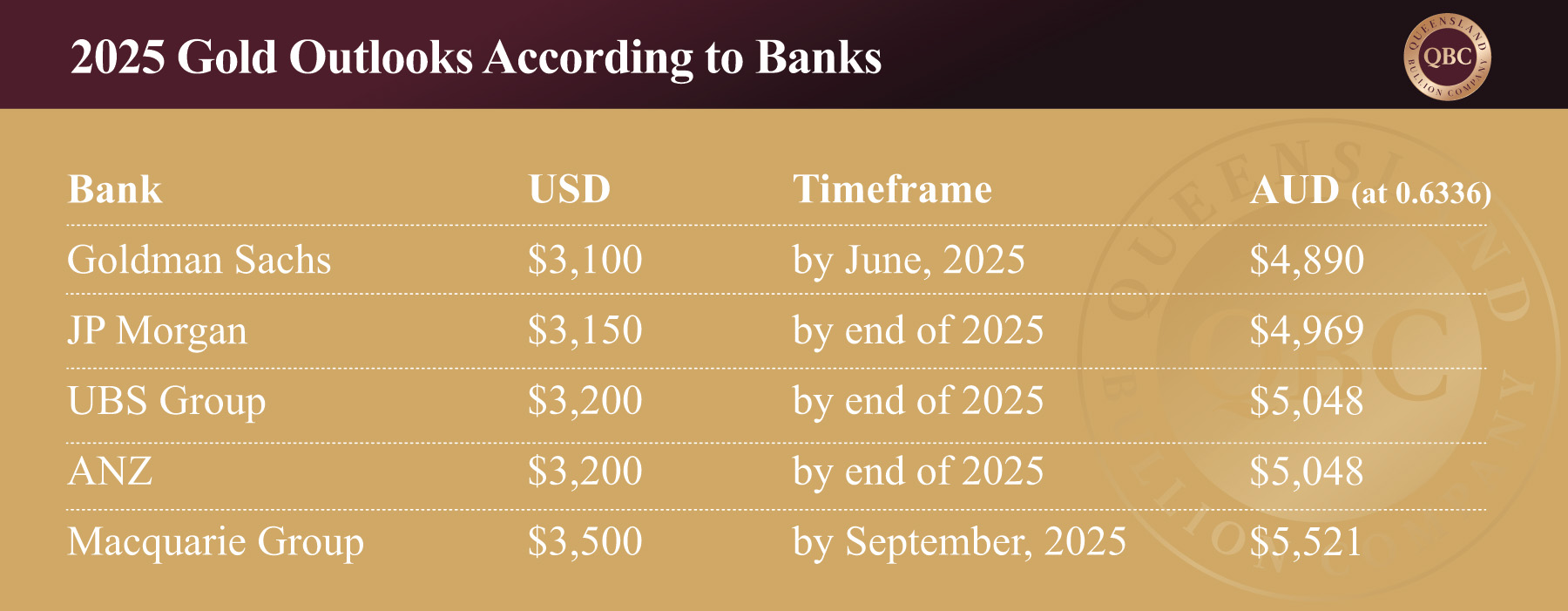
Individual analysts have projected the value of gold to be as high as US $4,000 by the end of the year (or AU $6,310 with an exchange rate at 0.6338).  And while we cannot be sure what the figure will be, we are very bullish at Queensland Bullion Company.  Below are new outlooks for gold among some of the major banks:


Yet as is usually the case when precious metals perform well, the economic undercurrents make for dangerous waters.  In a private communication Macquarie Bank recently warned its client base of a potential stock market crash in American markets.  They have based this on its analysis of US President Trump’s economic policies.  Further, US Secretary of the Treasury, Scott Bessent (who’s largest position is gold), is on record saying that the Trump Administration is not concerned with market volatility but, like the Federal Reserve, it is focussed on the real economy (not the stock market).  This is despite the fact that the Dow Jones Industrial Average has lost in excess of 7% and the NASDAQ more than 12% in the last thirty days.  This is not great news for the 62% of Americans who are invested in the stock market, so let us take a closer look at the economy where the next global recession will start before it unfolds worldwide.


Tariffs

Hot on the press is Trump’s use of tariffs more as a sanction rather than a tax.  While tariffs as a consumer tax is appealing in principle for some people, the reality is that the way Trump has applied them has created much volatility and uncertainty in the markets.  It could be that this is simply a technique to meet certain goals.  Recently threatening 200% tariffs on European alcohol, he has already imposed 25% tariffs on steel and aluminium (this affects Australia).  The 25% tariffs for Canada and Mexico came into effect on March 6, 2025 with a few minor adjustments. Additionally, Trump has also initiated a “Fair and Reciprocal Plan” on trade wherein any country with unfair tariffs or taxes applied against them will see it reciprocated in kind.  The result of such policies could see an economic slowdown as supply chains are disrupted, and retaliatory tariffs and trade restrictions are implemented.  Ultimately, inflation could be the likely end result that will push America closer to recession with some analysts convinced that the likelihood of such for this year is as high as 60%.


Real estate

The current state of American real estate is much worse than it was in 2008 at the height of the last boom.  Mortgage applications are down more than 60% (compared to 30% during the GFC).  Housing affordability has reached its lowest in 40 years.  In the early 1970s the average price of a home was 3 times the average median wage; in 2008 it was 4.7 times, and now it is a staggering 6.8 times.  Current prices are 80% above the historical norm, whereas in 2008 it was 35%.  Average days on the market has ballooned out 200% since 2022.  It is increasingly obvious that vendors are requiring to reduce asking prices in order to sell.  Housing construction contract cancellations are on the rise.  Demand has collapsed, sellers have capitulated, forced sales are on the horizon, and when the market collapses by 25% analysts expect that institutions will join the chaos and start selling off massive amounts of stock.  All these market indicators paint a dire picture.  As the world’s best salesman, when President Trump says he will make housing affordable for a single income family again, he has effectively sold the country on the after effects of a major real estate crash.


Stocks

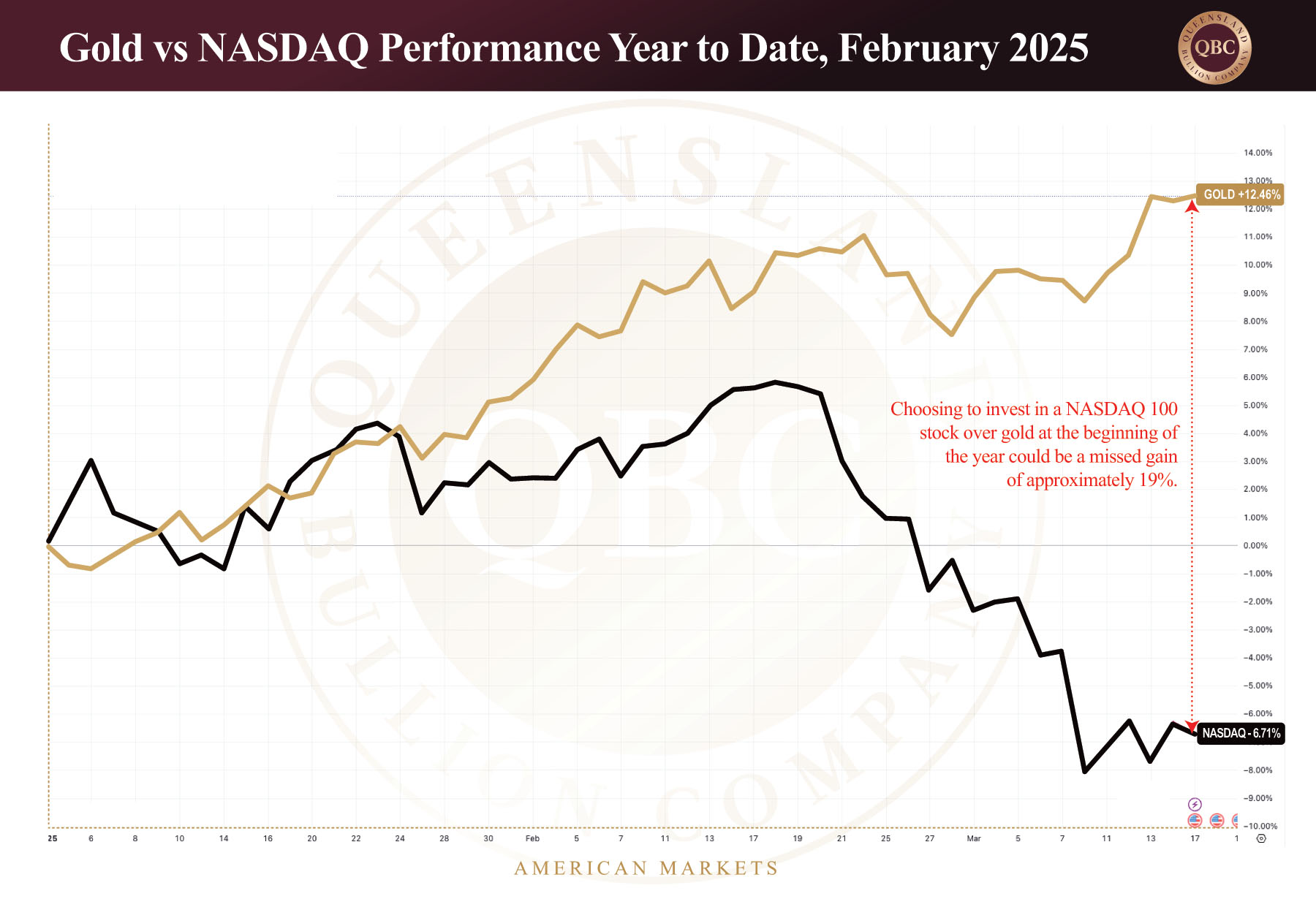
The stock market has been covered extensively in a prior article.  To summarise, we remind you that, according to the Stock Market Capitalisation to GDP Ratio, it is currently at 188% meaning that it seems seriously overpriced.  To put this into perspective this ratio was only 106% just prior to the GFC.  Below is a graph showing the difference in investment value had an investor chosen stocks in the NASDAQ 100, as opposed to gold in 2025 alone.


Inflation

Our last article established how the US Federal Reserve has lost the war against inflation.  While tariffs threaten to make it worse, it is clear that real estate and stock markets are sectors where inflation is rife.  Consequently, consumer sentiment in America is down 22% since the beginning of the year.  Expect gold and silver to benefit as other asset classes struggle.  Any future consolidation in the price of metals should be seen as an opportunity to buy for investors wanting to enter the market for the first time.  Seasoned investors who have long term goals know it is always better to accrue as capability allows.


Posted on — Leave a comment

Is It Better to Buy Gold Bullion in Person or Online?

Are you trying to decide whether it is better to buy gold bullion online or in person? For new investors and some more experienced buyers too, it is a common question. The good news is that both options offer excellent pathways to investment. The differences often come down to personal preference rather than significant advantages of one method over the other. Access to a physical gold store is also another fact that can make the decision easier.

Below we will outline the benefits that each purchase option provides. The same applies whether you are buying silver too.

Online Purchasing: Convenience at Your Fingertips

The digital approach, or buying gold bullion online, offers several conveniences:

  • Time efficiency: Browse and purchase at any hour without traveling to a physical location
  • Remote access: Particularly valuable for investors in rural Australia or those at a distance from a major city.
  • Price comparison: Easily view current rates and compare with historical pricing. If you visit a store, you are restricted to buying at that time, regardless of price fluctuations. Buying online allows you to plan to buy at the best time for your investment. 
  • Available shipping options: Have your investment delivered securely to your doorstep.
  • Storage solutions: Take advantage of secure storage options without needing to transport bullion. You can also collect it from us at a time that suits you.

In-Person Purchasing: The Tangible Experience

Some investors prefer the traditional approach:

  • Physical verification: See, handle and even test the gold before purchase
  • Building relationships: Meet the team who can manage your investments
  • Immediate possession: Walk out with your purchase rather than waiting for delivery
  • Peace of mind: For some, seeing the physical premises provides reassurance about legitimacy.

The Hybrid Approach

Queensland Bullion Company offers the best of both worlds:

  • Purchase online for convenience but choose in-store pickup
  • View products online first to research before visiting in person
  • Establish an in-person relationship initially, then continue transactions online

Security Considerations

Both methods offer strong security:

  • In-person purchases use established security protocols at the premises
  • Online purchases utilise encrypted transactions and insured shipping

Price Considerations

Pricing remains consistent whether purchasing online or in person, with all customers receiving the same competitive rates regardless of purchase method. Online purchases will include additional delivery costs if selected. Of course, the security of storing your bullion with us is also a benefit to many valued clients.

Our Final Thoughts

For most investors, the choice between online and in-person purchasing ultimately comes down to personal preference rather than any significant advantage. Our aim at Queensland Bullion Company is to ensure a seamless experience regardless of your chosen purchase method.  Making gold investment accessible to all Queenslanders and Australians, whether they’re in Sydney, Brisbane or Cairns and even further afield.