
Why the Pullback May Strengthen the Case for Long-Term Bullion Ownership
by Caroline Lima
If you own bullion or have been waiting to establish a position, the immediate question is straightforward: do the latest price falls weaken the case for precious metals, or have they created a more attractive entry point while the larger economic risks remain unresolved?
Our view is that the pullback has not removed the reasons investors hold bullion. Inflation remains elevated, interest-rate uncertainty is high and the Australian dollar can materially change local returns. For investors seeking long-term diversification rather than a short-term trade, lower prices may offer an opportunity to build exposure more deliberately.
Three Points to Take Away
– A lower price can improve the entry point when the underlying macroeconomic risks have not disappeared.
– Physical bullion remains a tangible asset with no issuer that can default, making it different from cash, bonds and bank deposits.
– The sensible case is not to predict the exact bottom, but to build an appropriate allocation gradually and understand the different roles of gold and silver.
Why the Australian Picture Supports the Case for Bullion
At time of writing, gold is US$4,015.60 (5,693 AUD) per troy ounce and silver at US$52.06 (73.81 AUD).
Australia faces its own cost-of-living and borrowing pressures. The Reserve Bank of Australia (RBA) raised the cash rate to 4.60% in September. Inflation figures released by the Australian Bureau of Statistics (ABS) on 28 October then showed annual inflation at 4.3% in September, up from 4.0% in August. The next RBA decision is due on 3 November.
That combination matters. Higher rates can make cash and term deposits more competitive, but they do not remove inflation, currency or financial-system risk. If inflation remains difficult to contain, purchasing power can continue to erode. If economic conditions weaken and rates eventually fall, the relative attraction of non-interest-bearing gold may improve. Bullion provides a way to diversify across both possibilities rather than relying entirely on one policy outcome.
The Australian dollar adds another layer of diversification. If it weakens, an unchanged US-dollar metal price converts into more Australian dollars. A stronger Australian dollar can reduce local returns, so this protection is not automatic; nevertheless, internationally priced bullion can help diversify exposure away from the domestic currency.
Why the Pullback May Be an Opportunity
The most comfortable time to buy a safe-haven asset is often after the risk has become obvious, but by then the price may already reflect it. Buying during a pullback requires more patience, yet it can provide a better starting price for investors whose reasons for owning bullion have not changed.
This does not mean the market has reached its final low. Gold and silver can fall further, particularly when interest rates are high, the US dollar is strong or investors sell liquid assets to raise cash. The practical response is not necessarily to wait for a perfect signal that may never arrive. Staged purchases can reduce the risk of committing everything at one price while still establishing exposure before the next period of market stress, although they do not eliminate the risk of further losses.
Why Bullion’s Traditional Safe-Haven Role Still Matters
Bullion’s safe-haven role is not based on fashion. Physical gold is not a promise from a bank, company or government. It has no issuer credit risk, cannot default and is recognised across markets and borders. Those characteristics remain useful when investors are concerned about inflation, currency weakness, heavy debt burdens or confidence in financial institutions.
That does not make bullion immune from price declines, nor does it remove storage, custody and liquidity considerations. Its role is different: it can diversify risks that are difficult to hedge with assets tied to the same banking, currency and credit system. In that sense, bullion has not lost its relevance simply because interest rates are higher or prices have become volatile.
Gold and Silver Offer Different Opportunities
The US Federal Reserve left interest rates unchanged at 3.75% to 4.00% on 28 October. Inflation remained a concern, and two members preferred an immediate increase of 25 basis points. The Fed did not commit to its next move. Higher rates can pressure both metals because neither pays interest, but gold’s lack of issuer risk may continue to support demand for financial protection.
Silver has an additional industrial dimension and normally moves more sharply than gold. Metals Focus reports weaker investment demand and improved wholesale availability, and forecasts a possible silver market surplus in 2027 as manufacturers reduce silver use in some applications. That is a forecast, not an established outcome.
The immediate shortage argument has therefore weakened, but silver’s longer-term case has not disappeared. Renewed investment demand, stronger industrial use or tighter physical conditions could change the balance again.
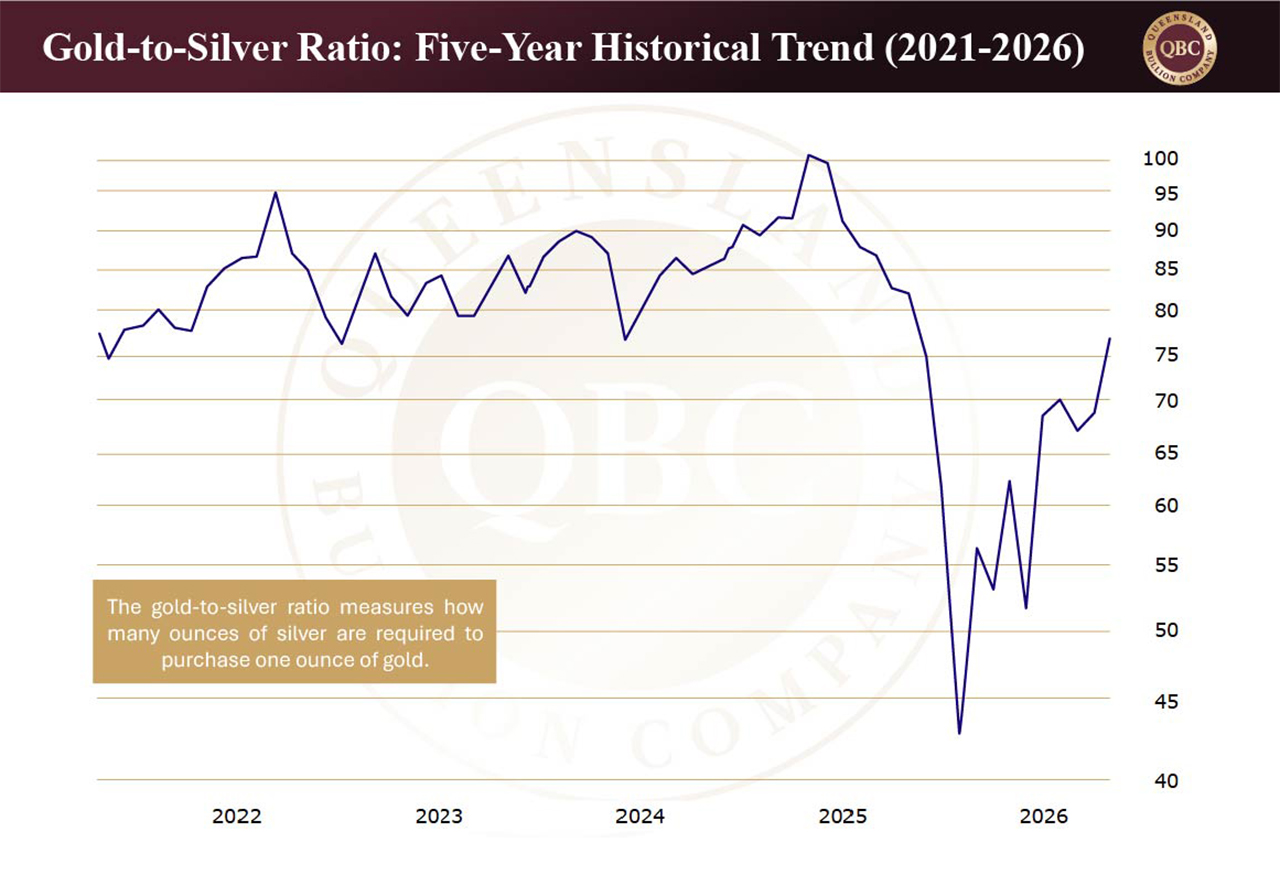 For investors prepared to accept larger price swings, silver can offer greater upside participation, but also greater downside risk, than gold.
What Bullion Can Protect and What It Cannot
Bullion may help diversify against persistent inflation, a weaker Australian dollar, financial stress and declining confidence in conventional assets. It can also provide direct ownership of an asset outside an issuer’s balance sheet. It does not guarantee a profit, produce income or rise every time shares fall.
For someone considering a purchase, compare the total price, including product premiums and any delivery or storage costs. More metal in wholesale vaults does not guarantee that every retail coin or bar will be available at a lower premium. Product availability, fabrication, freight and demand still matter.
Existing holders should also consider their time frame and need for accessible cash. Understand the ownership, custody and sale arrangements applying to the product. The protective qualities of bullion are strongest when the position is appropriately sized and does not force a sale during short-term weakness.
What do we think?
We believe the present environment remains constructive for long-term bullion ownership. Inflation is still a live issue, policy uncertainty remains high and neither domestic cash nor financial markets provide protection against every outcome. The recent weakness may therefore be a useful opportunity for investors who are underallocated to physical metals to begin, or gradually add to, a strategic position.
Gold remains the stronger core defensive asset because of its market depth, recognition and lack of issuer credit risk. Silver may suit investors who can tolerate more volatility and want exposure to both investment demand and industrial use. Neither metal should be bought on the assumption of an immediate rebound.
The aim is not to chase a headline or call the exact bottom. It is to decide whether a measured allocation to physical bullion improves the resilience of your overall holdings. For many investors, building that allocation during weakness may be more disciplined than waiting until fear has already pushed safe-haven demand and prices higher.